Clear arrival times
We keep you posted on when to expect us.
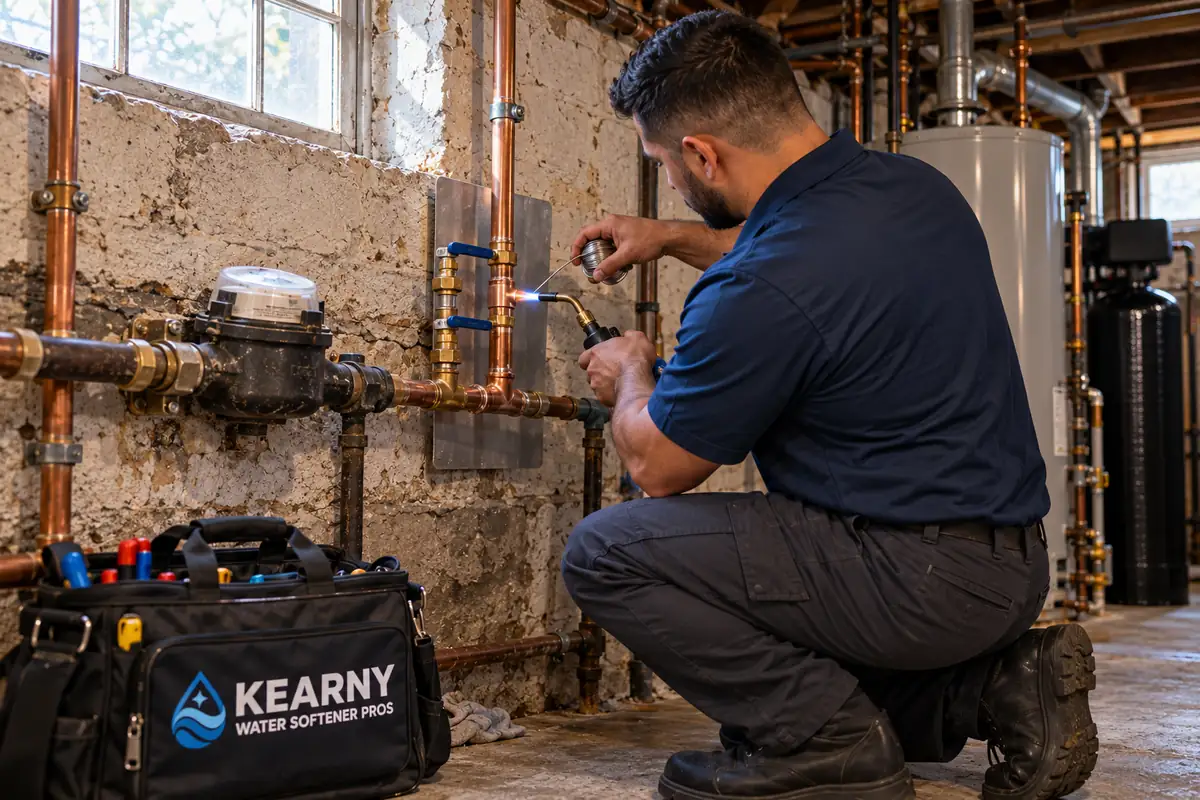
Need a water softener installer in Kearny, New Jersey? Water softener installation is the fix for hard water that scales pipes, spots glassware, and shortens the life of a water heater. We test your water first, size the softener to your household, plumb it in, program it, and test the water again before we leave. Call now, 24 hours a day.
We keep you posted on when to expect us.
Review the approach and price before deciding.
Equipped vehicles and respectful cleanup.
Neighbors helping neighbors, from the first call to the final check.
Our water softener installation in Kearny covers system selection, plumbing connection, programming and testing. Add-ons like reverse osmosis integration or advanced filtration are available separately.
Evaluating water hardness and plumbing layout to select the right softener model and setup.
Connecting the resin tank, brine tank and control valve with quality PVC piping, a bypass valve and a drain line.
Setting hardness and regeneration cycles for optimal salt use and water softness.
Using water hardness test kits and flow meters to verify installation success.
Explaining maintenance tasks like salt refilling and troubleshooting common issues.
Tell us what is happening and a local water treatment technician will give you a clear next step, day or night.
Water softener installation in Kearny, NJ, means placing and connecting the control valve, resin tank and brine tank to your plumbing. The ion exchange resin swaps hardness minerals such as calcium and magnesium for sodium or potassium ions, preventing scale buildup.
Homes on Kearny's town water get treated reservoir water, not private well water, so most installs here are city-water setups. The right size still comes from the hardness reading at your own tap and from how many people and bathrooms the softener has to serve. A unit that is too small regenerates too often, wears out its resin and is prone to salt bridging, while an oversized one regenerates so rarely that brine sits in the tank for weeks. We size, plumb and program the softener to avoid both, starting with an on-site hardness test.
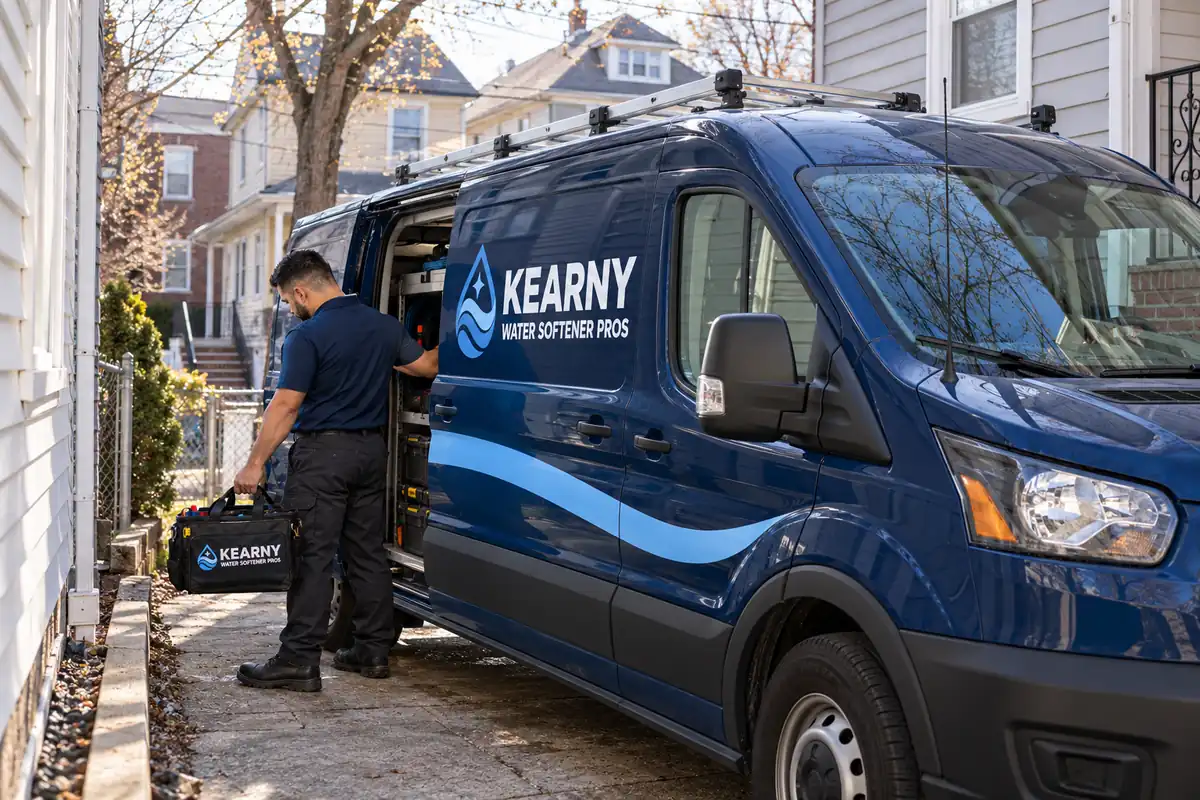
A licensed technician runs a water hardness test and inspects the plumbing to recommend the best system. This step usually takes 30-45 minutes.
We choose a suitable softener, such as a Fleck or Kinetico model, sized for your home, water usage and local water conditions.
Installation involves connecting the resin tank, brine tank and control valve with PVC piping, a bypass valve and a drain line. This step typically lasts 3-5 hours.
The softener's control valve is programmed with regeneration cycles based on your water hardness, ensuring efficient operation and salt usage.
Post-installation, we test water hardness with a test kit and check the flow to confirm system performance before cleanup and a customer walkthrough.
Holds the salt that makes the brine used to recharge the resin during regeneration.
Manages water flow and regeneration cycles for efficient softening.
Measures mineral levels to customize system setup.
Monitors water usage to optimize regeneration timing.
Draws brine from the brine tank into the resin tank during regeneration.
Swaps calcium and magnesium for sodium or potassium, which is what softens the water.
Every system we install is certified to the national standard for softener performance and safety.
Lead-free parts and materials, installed to state plumbing codes, keep contaminants out.
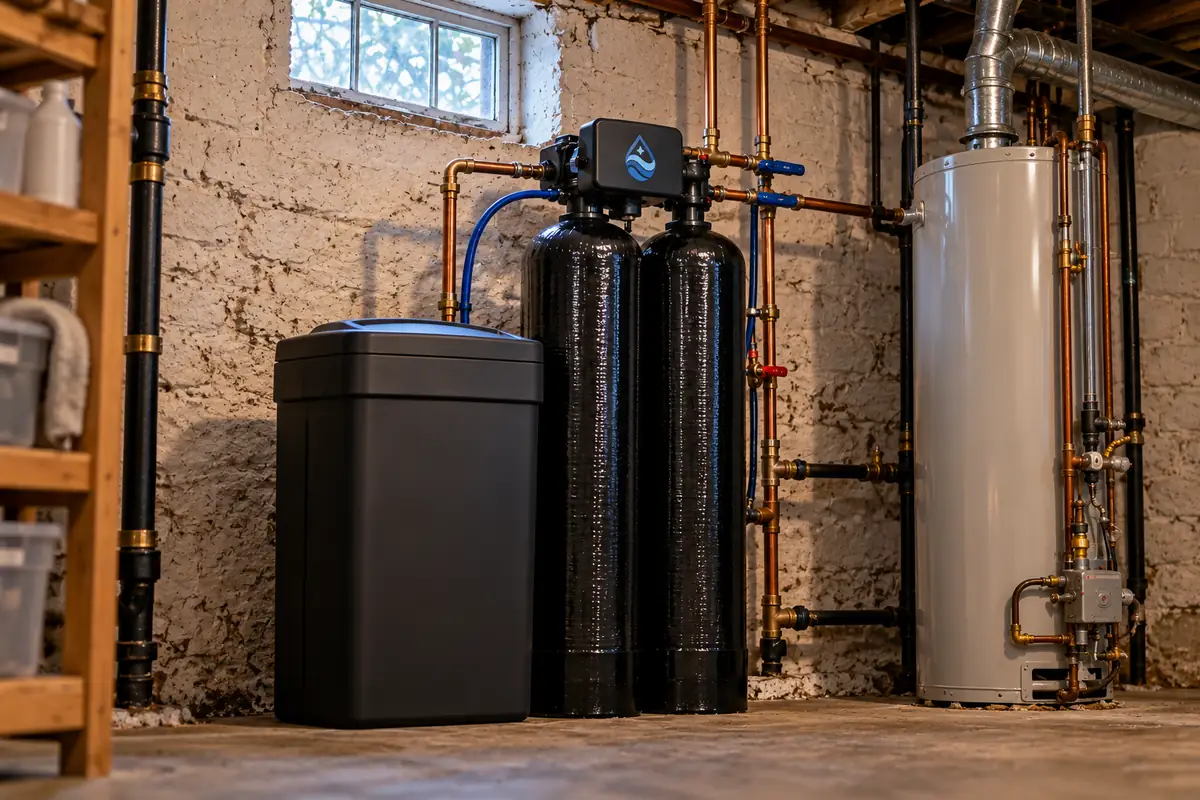
We assess water hardness and install a Fleck system with a control valve to restore flow and prevent further damage. Water pressure improves, and appliances last longer without scale deposits.
Our team installs a combined iron removal and softening system calibrated for their water profile. Staining is eliminated, reducing cleaning costs and equipment maintenance.
We install a Kinetico whole-house system with automatic regeneration. Soft water throughout the home improves skin comfort and plumbing longevity.
Kearny is a member town of the North Jersey District Water Supply Commission, whose Wanaque Reservoir system supplies treated surface water, so a softener for a home on the town supply is set up for city water rather than a private well. Your yearly Consumer Confidence Report names the source and what was detected. The hardness we program comes from the test at your tap, because pipes and fixtures can change what actually reaches the softener.
In many older Kearny houses the main shutoff sits in a basement corner. The softener goes after the meter and ahead of the water heater, with a bypass valve so you still have water during service.
One softener can serve a whole building, or each unit can get its own, depending on how the water lines are split. We trace the lines first so every tenant ends up with soft water.
Regeneration water has to leave through a drain with an air gap, never a hose pushed into a pipe. A correct drain keeps waste water from backing up toward the softener.
Before we leave, the softener runs a regeneration, we test the water at a tap, and you get a short walkthrough of the bypass valve, the salt level and the settings we programmed.
We install from homes in the Arlington section and the Kearny Uplands to businesses in South Kearny and at Kearny Point. Busy sites get commercial water softener service sized for heavier daily use.
Both units of a two-family house had spotty glasses and crusted showerheads from hard water scale buildup, and the owner was not sure one softener could serve both.
The technician traced the water lines, placed the softener on the main line ahead of the split, and both units now get soft water.
Maintenance: One monthly salt check covers both units, plus a yearly service visit.
A condo owner wanted soft water but had only a narrow utility closet next to the water heater.
A compact cabinet-style softener fit the closet, with its drain line run to the laundry drain through a proper air gap.
Maintenance: Salt goes in through the top of the cabinet, and the settings are checked once a year.
A new tankless water heater kept showing scale warnings, and the homeowner had to descale it again and again.
A softener installed ahead of the heater stopped new scale from forming, so descaling is needed far less often.
Maintenance: Monthly salt checks and a yearly hardness test keep the heater protected.
Professional water softener installation solves the water quality problems Kearny residents face most often.
Scale cuts water flow, raises energy bills and wears out appliances early. The softeners we install swap hard minerals for sodium ions, preventing scale and extending plumbing life.
Rust-colored stains are hard to remove and can damage surfaces. We install iron filters and softeners that reduce iron content, preserving fixtures and fabrics.
A salt bridge stops regeneration, so the softener stops working and hard water comes back. Every installation includes proper brine tank configuration and maintenance guidance to prevent salt bridging.
Hard water shows up first on glass, fixtures and appliances. The first four signs below point to hardness, which a softener fixes. The last two look similar but need a different fix, so it pays to know which one you have before installing a water softener.
Chalky buildup on faucets, showerheads and kettles that comes back soon after cleaning, plus spots on dishes and shower glass.
Soap scum rings in the tub, stiff laundry and more detergent than the label calls for. Softened water lathers with less soap.
Rumbling tank heaters, tankless units that need descaling and dishwashers that leave film. Softened water ahead of the heater cuts the buildup.
Mineral deposits narrow aerators and shower nozzles. If cleaning them brings the flow back for a few weeks only, hard water is the likely cause.
These usually point to iron or manganese, often from older pipes or a water heater. A tap test shows the cause, and iron and manganese removal goes in ahead of the softener only when the test finds it.
A softener treats hardness only, so it will not change how the water tastes or smells. That is a job for whole house water filtration.
Not sure which one you have? A water hardness test at your tap settles it, or call (201) 365-5543 and describe what you see.
The right water softener system depends on three things: the hardness at your tap, how much water the household uses each day and the space you have near the main line. These are the setups we install most in Kearny homes and buildings.
The standard choice for most homes. Ion exchange resin removes calcium and magnesium, and a metered, demand-based valve counts gallons and regenerates only when the resin is close to capacity, which usually saves salt and water.
A timer valve regenerates on set days no matter how much water you used. It is simple, but a metered valve matches a household whose water use changes from week to week.
A twin-tank setup switches to the second tank during regeneration, so soft water never stops. It suits large households, two-family houses and businesses with steady demand.
Cabinet-style softeners fit condos and small utility closets where two separate tanks will not. The technician still checks drain access and floor protection first.
A salt-free conditioner changes how minerals behave but leaves them in the water. It cuts scale with no salt, brine tank or drain line, so it fits some homes and not others. See water conditioner installation.
When the test also finds sediment, a chlorine taste or iron, a filter goes in ahead of the softener, and a reverse osmosis system can serve drinking water at the kitchen sink.
Not sure which one fits? Call (201) 365-5543 and the technician will match the system to your tap test, household size and space, 24/7.
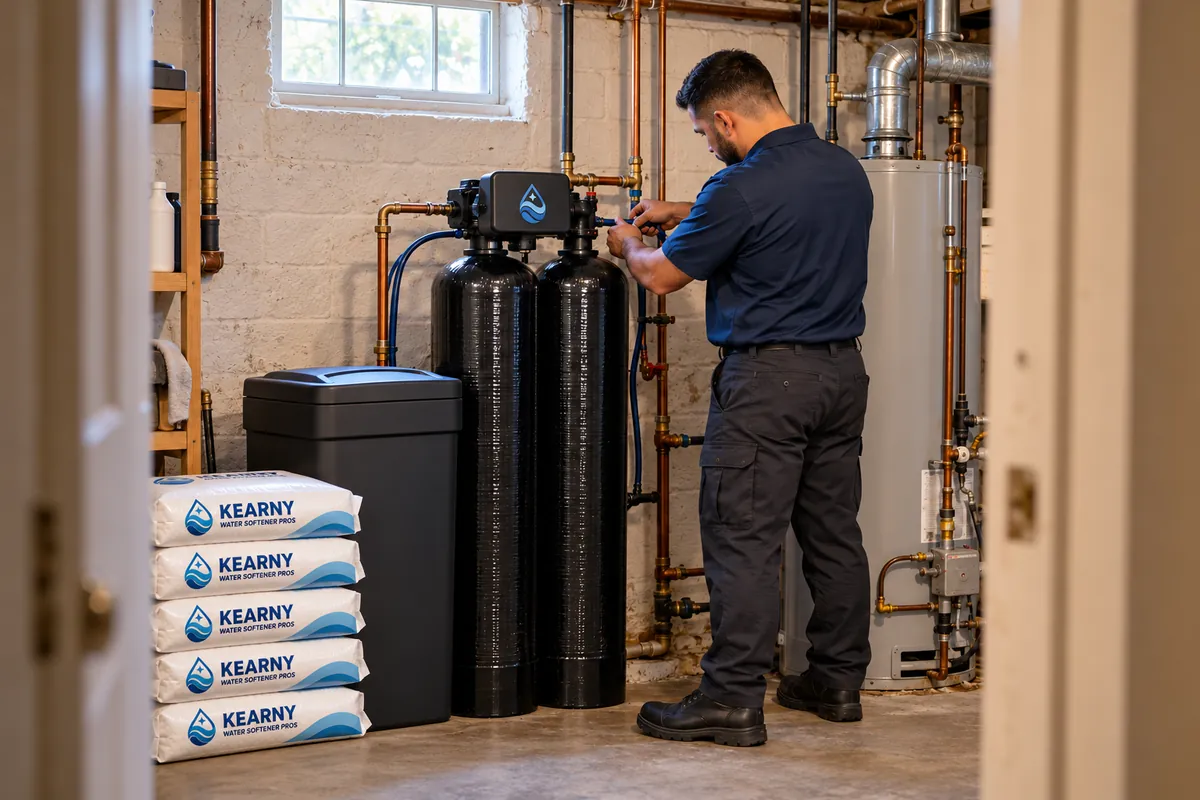
Our team brings local experience and technical training to every water softener installation in Kearny. We are licensed and insured and use lead-free materials for safe, code-correct installations.
Most installation questions are about space, plumbing and what the new system will protect. These are situations Kearny homeowners describe when they call about putting in a water softener.
Hearing one of these at your place? Call (201) 365-5543. We answer 24/7.
A typical water softener installation in Kearny, NJ, takes 3 to 5 hours, depending on system size and plumbing complexity. We answer 24/7 for emergency installations to restore service.
The spot needs three things: access to the main water line before the water heater, a drain for regeneration water, and a standard outlet. In older Kearny homes that is often a basement corner, and in apartments and condos it may be a utility closet. The technician confirms the spot after testing your water and checking the plumbing.
Yes, most Kearny homes can accommodate a water softener, though older homes may need plumbing upgrades first. Our installation team evaluates each property for compatibility.
Fleck, Kinetico and Pentair are highly recommended for water softener installation in Kearny, NJ, thanks to their reliability, warranty coverage and compliance with NSF/ANSI 44 standards.
Only for part of the visit, while the technician cuts into the main line and fits the bypass valve. Once the bypass is in, water can run through it while the rest of the setup and programming is finished. We let you know before the water goes off.
Not always. A softener treats hardness only. If your test also shows a chlorine taste, sediment or iron, a whole house filter or iron and manganese removal may go in ahead of it, and a reverse osmosis system can serve drinking water at the kitchen sink. The technician explains what the test shows before recommending anything.
Look for an installer who tests your water before choosing a size, plumbs in a bypass valve and a drain line with a proper air gap, programs the softener from your test result and tests the water again before leaving. Our technicians are licensed and insured, and they follow those steps on every water softener installation in Kearny.
Yes. Hardness in New Jersey well water varies a lot from one aquifer to another, and well water often carries iron too, so a well system may need extra treatment ahead of the softener. Kearny homes on town water get treated reservoir water from the North Jersey District Water Supply Commission, so most installs here are simpler city-water setups, sized and programmed from the hardness at your tap. See water hardness testing for more on New Jersey hard water.
It depends on what your water test and your home call for: the softener type and capacity, whether a filter or iron treatment has to go in ahead of it, how far the spot is from the main line, a drain and an outlet, and whether older piping needs changes first. The technician explains the price on site before any work starts.
Size depends on two numbers: the hardness at your tap in grains per gallon and how much water your household uses each day. A unit that is too small regenerates too often, and one that is too large lets brine sit for weeks, so we size it from your test, not from the size of the house.
Check the salt about once a month and keep it above the water line, break up any crust that forms, and make sure the bypass valve stays in service position. A yearly visit cleans the brine tank and checks the settings. See water softener repair and maintenance.
Not seeing your question? Call our local team to learn about urgency, timing and what to expect.
Call our local team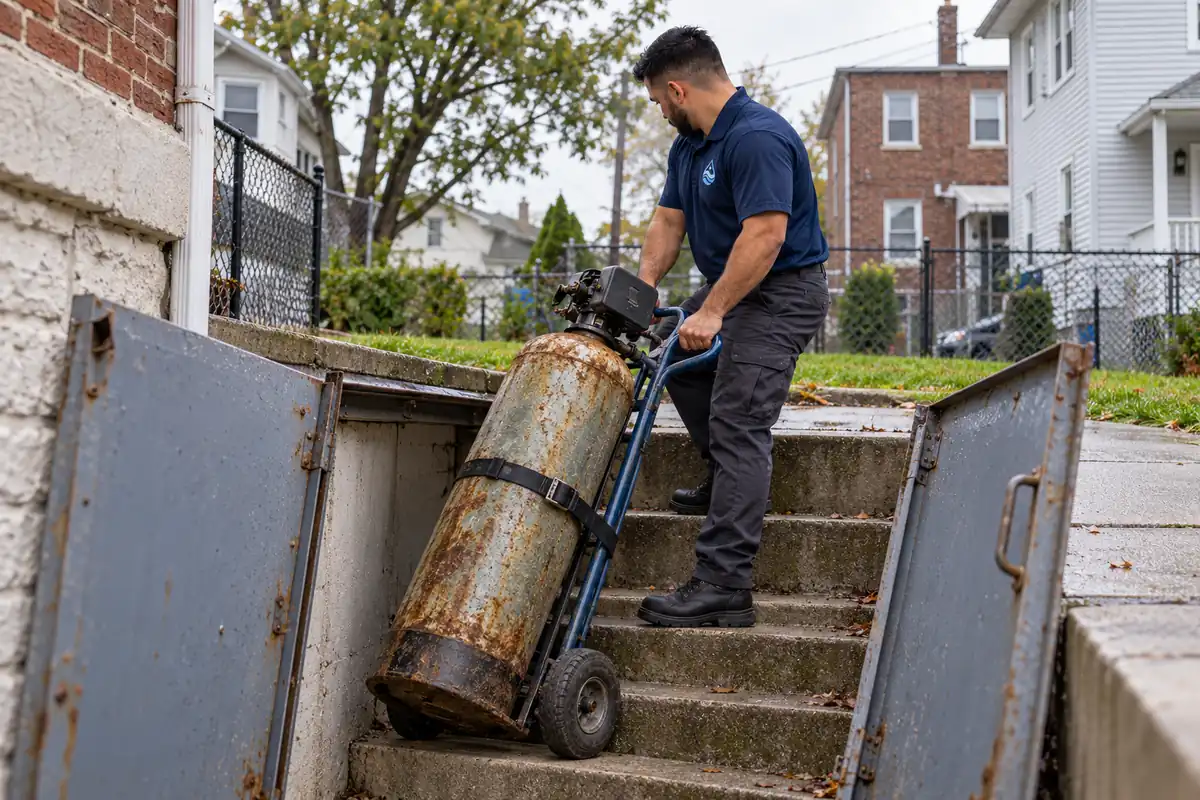
Upgrading or replacing an existing system complements a new installation by improving efficiency and addressing aging components.
View service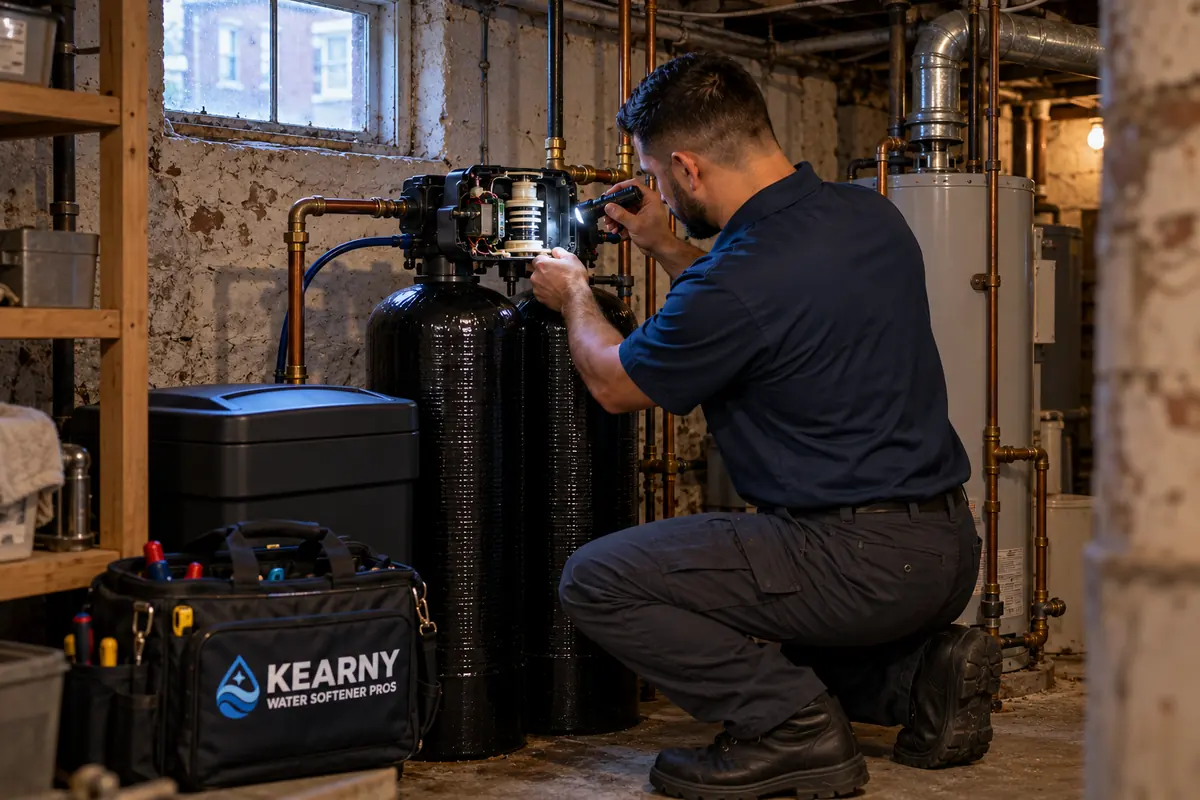
Regular maintenance and prompt repairs keep your water softener operating optimally after installation, preventing issues like salt bridging.
View service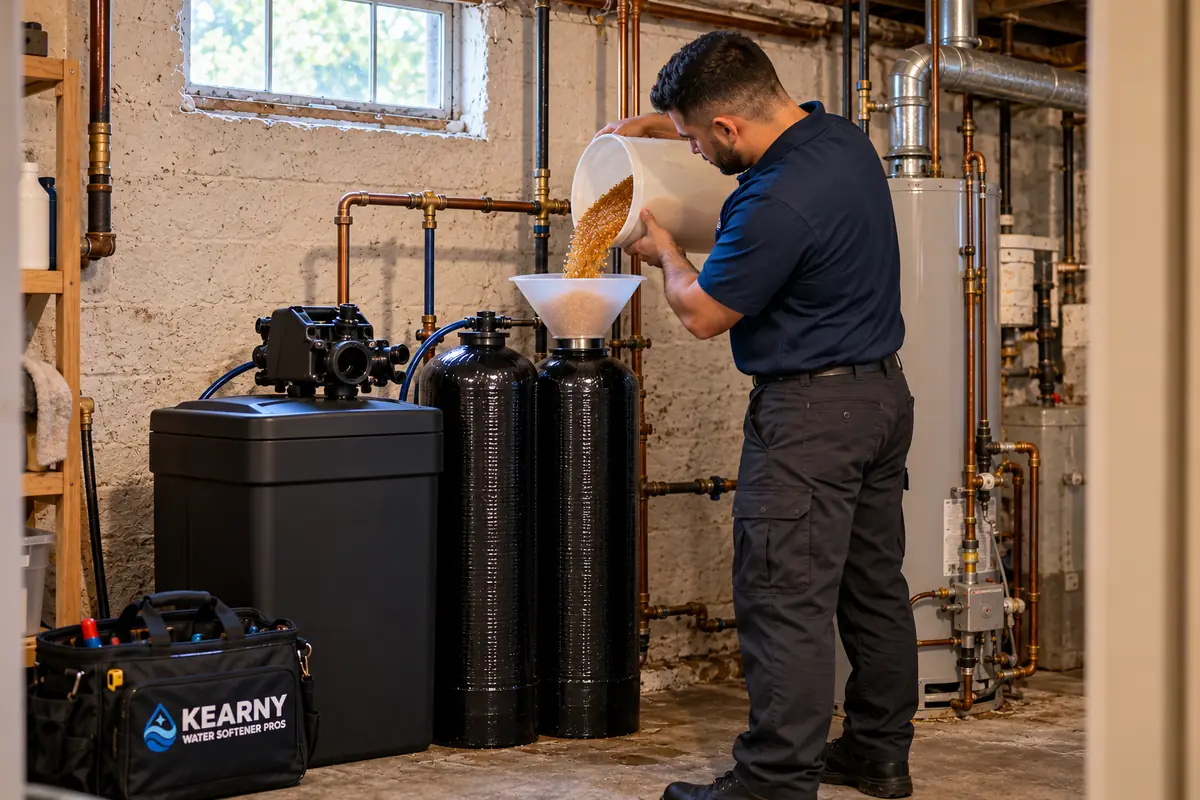
Replacing degraded ion exchange resin restores softening capacity, an essential service following years of water softener use in Kearny.
View service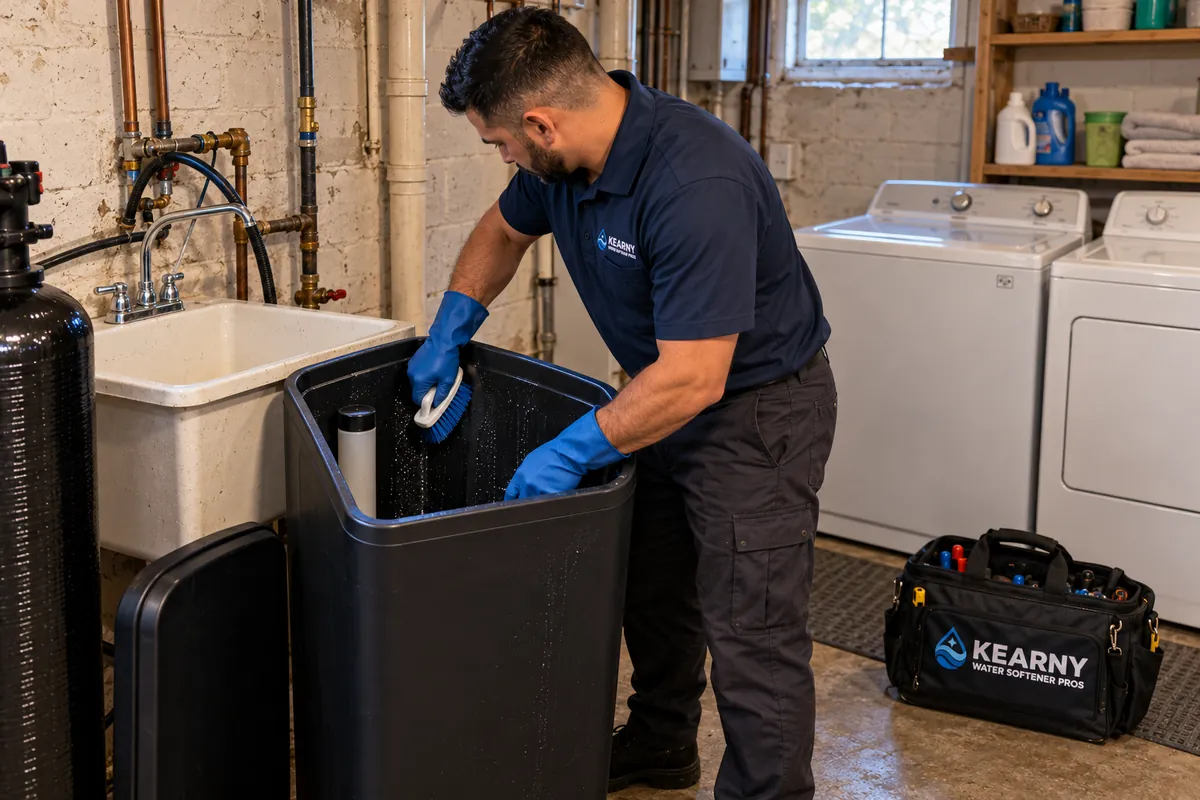
Cleaning removes buildup inside tanks and plumbing, ensuring the softener remains sanitary and efficient after installation.
View service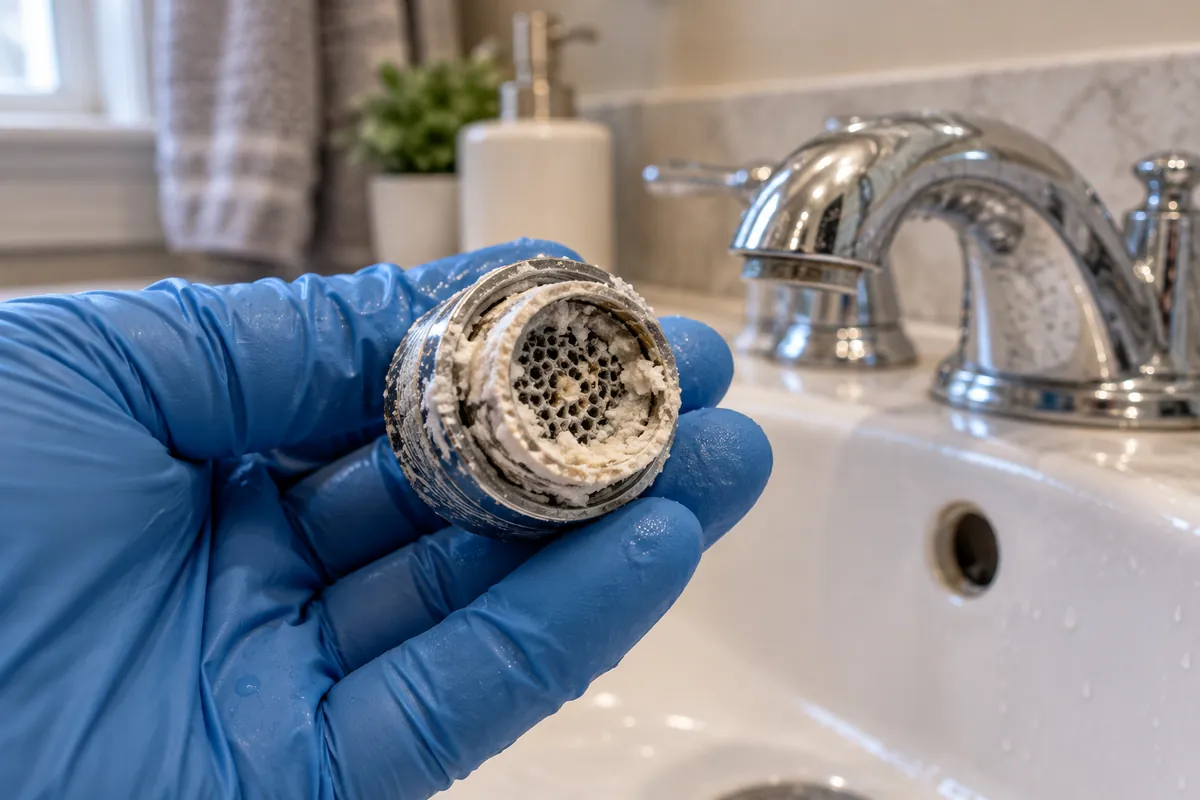
Call anytime for water softener installation or water treatment service. We are open 24 hours a day, 7 days a week, including weekends and holidays. Expect a fast answer and a clear next step.
A quick summary on the call helps us plan the right work for your Kearny home.