Clear arrival times
We keep you posted on when to expect us.
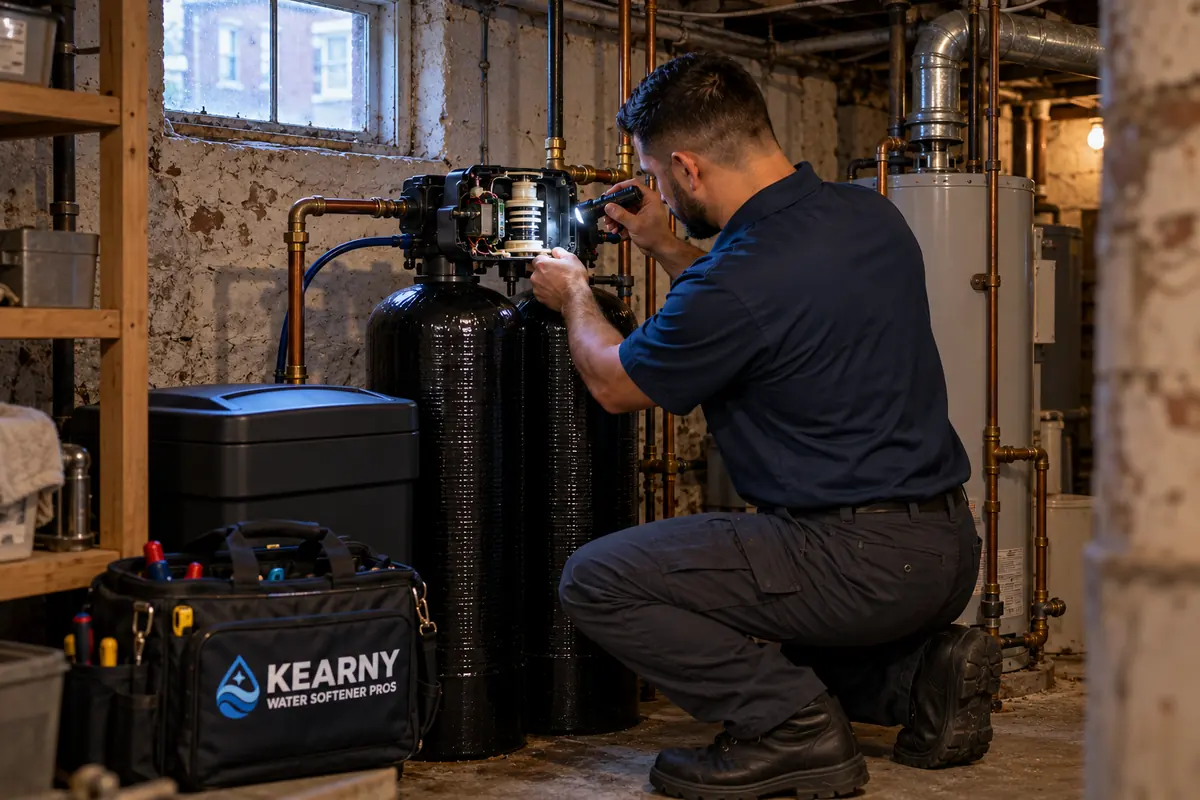
Water softener repair in Kearny, NJ, starts with the failures we see most in Hudson County homes: a salt bridge that blocks regeneration, a leaking resin tank, or a control valve stuck mid-cycle. We test the system, show you what failed, and fix it 24/7. Call now.
We keep you posted on when to expect us.
Review the approach and price before deciding.
Equipped vehicles and respectful cleanup.
Neighbors helping neighbors, from the first call to the final check.
Our repair and maintenance service in Kearny covers inspections, cleaning, and repairs of critical components. Some add-ons, like resin replacement or system upgrades, are priced separately.
Checking salt levels, removing salt bridging, and cleaning the tank to ensure proper regeneration cycles.
Evaluating resin bead condition for degradation or fouling that affects softening efficiency.
Diagnosing and fixing valve malfunctions that disrupt water flow or regeneration timing.
Adjusting settings to match water hardness levels and usage patterns for optimal performance.
Identifying and repairing water softener leaks to prevent water damage and system failure.
Tell us what is happening and a local water treatment technician will give you a clear next step, day or night.
Water softener repair and maintenance in Kearny, NJ is a specialized plumbing service that fixes issues like resin bead degradation, salt bridging, and control valve malfunctions to restore optimal water conditioning performance. It includes inspecting the brine tank, resin tank, and control valve to ensure all components meet NSF/ANSI 44 standards and EPA WaterSense guidelines.
Most repair calls start with one complaint: the water feels hard again. The cause is usually in one of four places: the salt (a bridge or mush in the brine tank), the brine draw (a clogged injector or screen), the control valve (worn piston, seals or motor) or the resin. We test hardness before and after the softener, run a manual regeneration and watch each cycle, so the repair targets the real fault instead of a guess. When the cause is unclear, it starts with water softener troubleshooting.
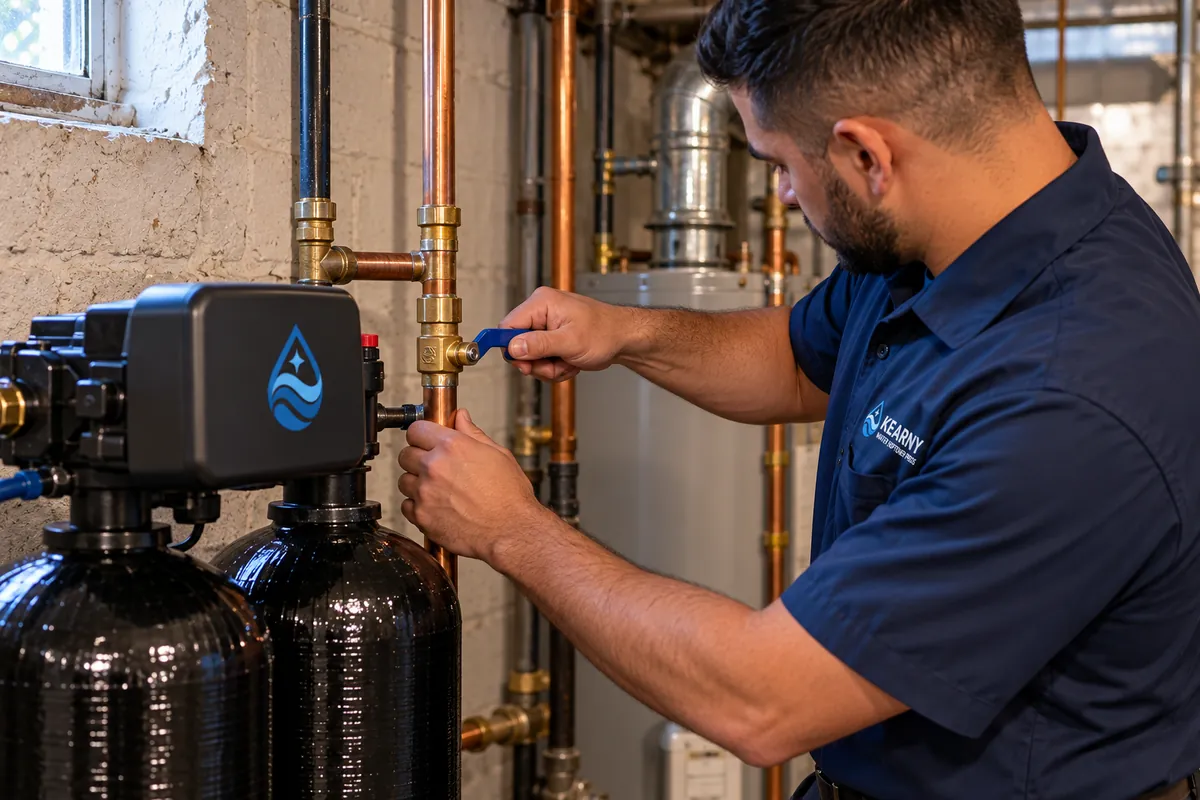
Most water softener repair calls come down to six faults. Here is what each one looks like from your side, what usually causes it and how the technician fixes it.
The salt level never seems to drop and the water slowly turns hard. A hard crust has formed over an empty pocket in the brine tank, or the salt has turned to sludge at the bottom, so no brine is made. We break the bridge, scoop out the mush, clean the tank and run a regeneration to confirm the brine draw.
A brine tank full of water usually means the softener refills but never draws the brine back out. The common causes are a clogged injector or screen, a kinked or cracked brine line, a stuck safety float or a blocked drain line. Each part is checked in that order, then cleaned or replaced.
Hard water comes back even though the softener uses salt. The resin beads soften water by ion exchange and are recharged with brine during regeneration, so worn or coated beads stop doing the job. Small beads in faucet aerators point to a cracked distributor. The fix is a resin cleaning or a resin bed replacement.
Water runs to the floor drain all day, the valve head drips, or pressure drops after the softener. Worn seals, spacers or a scored piston let water slip past inside the valve. We rebuild the valve with new seals and spacers or a new piston, and fit a new control valve when parts are no longer made.
The display is blank, the clock is wrong or the softener never starts a cycle. A power outage can reset an older timer so regeneration runs at the wrong hour, and a failed motor, switch or board stops the valve from moving at all. We reset the program, test the motor and board, and replace what failed.
The softener regenerates too often, never regenerates, or stops mid-cycle with water running to drain. Wrong hardness or capacity settings, a stuck water meter or a valve that cannot find its home position are the usual causes. We correct the program from a tap test and watch a full cycle: backwash, brine draw, rinse and refill.
A few quick checks can save a visit or help the technician find the fault faster. Leave anything that means opening the control valve or the tanks to us.
Seeing one of these? Call (201) 365-5543 and a Kearny technician will talk you through the next step, day or night.
A licensed technician inspects the resin tank, brine tank, and control valve, using tools like the water hardness test kit and flow meter to diagnose issues within 30-45 minutes.
Technicians find the cause, such as a salt bridge, a clogged injector or worn resin, and show you what failed.
Cleaning involves removing scale and sludge, flushing the brine tank, and refilling it with sodium chloride or potassium chloride salt, making sure the brine injector and resin bed are clear.
Faulty parts like control valves or brine injectors from trusted brands such as Fleck or Pentair are repaired or replaced, typically within 2-4 hours.
The system is tested for flow rate, hardness levels, and regeneration timing, then calibrated to the manufacturer's specifications before technician sign-off.
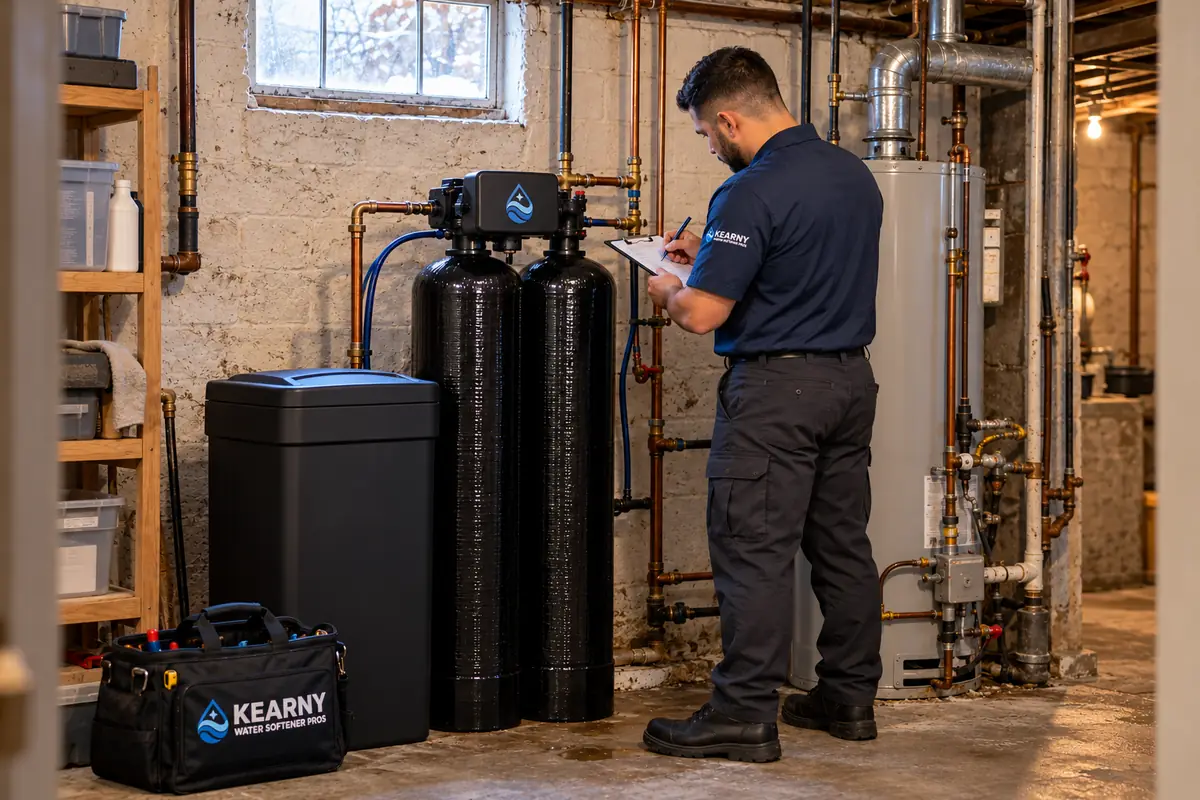
Measures mineral levels to diagnose softener efficiency and calibrate regeneration cycles.
Monitors water flow rates to detect leaks and valve malfunctions.
Draws brine into the resin tank during regeneration; cleaned or replaced if faulty.
Manages water flow and regeneration timing; replaced or repaired as needed.
Softens water by removing calcium and magnesium; replaced when degraded.
Repairs and calibrations ensure systems meet water softener performance and safety standards.
Service protocols protect water quality by preventing contamination during repairs.
Specialized cleaning methods safely break salt bridges without damaging tanks or valves.
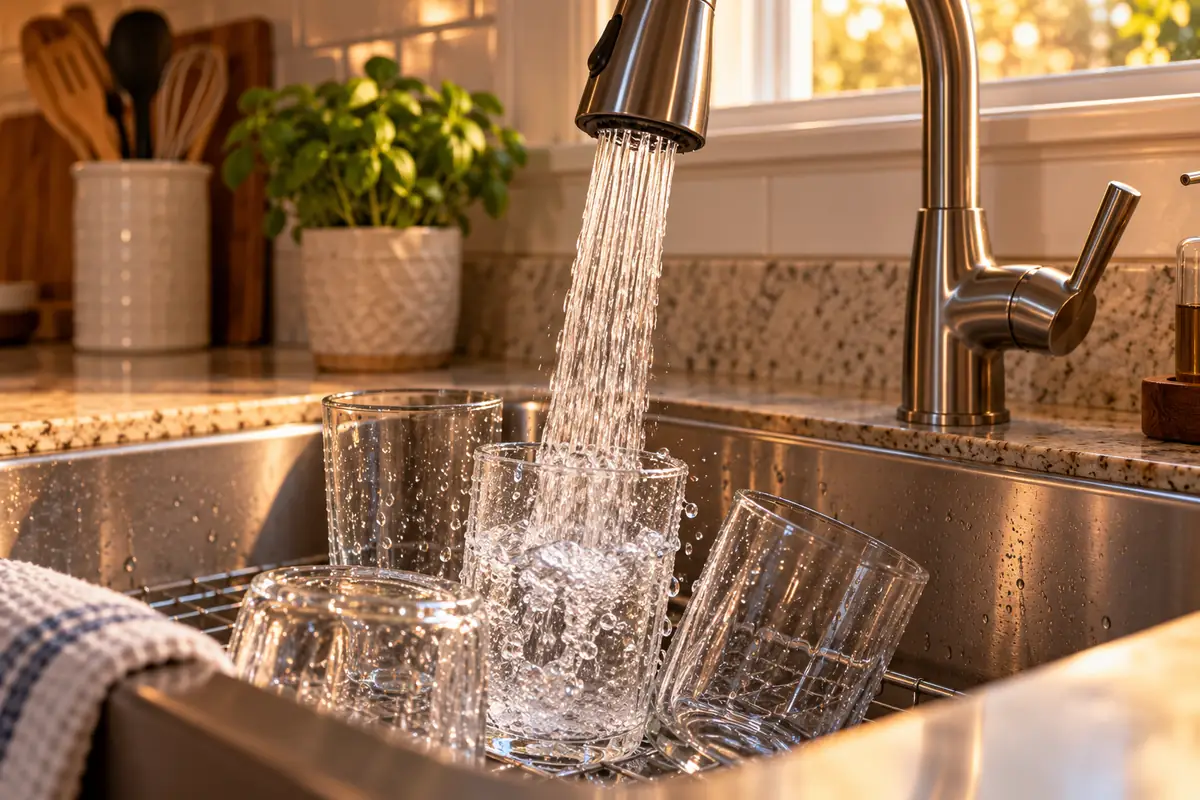
We inspect and repair iron filters and resin tanks to prevent staining and maintain water quality. Customers see clear water and reduced staining within days after service.
Technicians remove salt bridges and clean the brine tank, restoring normal regeneration. Soft water returns, improving appliance efficiency.
Our 24/7 emergency repair service in Kearny stops leaks quickly to avoid downtime. Businesses resume operations promptly with code-compliant repairs.
Kearny's town water is treated reservoir water from the North Jersey District Water Supply Commission system, so repairs here are mostly about the softener itself, not well problems like heavy sediment. Orange or brown stains on fixtures can come from old steel pipes or a water heater as well as from the water, so the technician checks those before blaming the softener.
Many softeners sit next to a floor drain or laundry sink. A drain line that is kinked, cut or clogged stops regeneration and can flood the floor, so it is one of the first things we check.
We replace worn seals, spacers, injectors, brine floats and motors, and source harder-to-find valve parts through water softener parts replacement.
Once a year we clean the brine tank and injector, check the resin and valve, and confirm the hardness setting still matches your tap. It is the simplest way to avoid a middle-of-the-night call.
A leaking tank, a valve stuck in backwash or salty water at every tap should not wait. Our emergency water softener service answers 24/7.
Repairs in apartments, shops and offices are scheduled around tenants and opening hours, from the Arlington section to Kearny Point. Larger systems get commercial softener repair.
After a power outage, a Kearny Central softener began regenerating in the middle of the day, and hard water came through while it ran.
The technician reset the clock and program, checked the drive motor, and moved regeneration back to the early morning hours.
Maintenance: Check the softener clock after any outage, and book a yearly service visit.
A Riverside residence experienced poor water softening from degraded ion exchange resin after 10 years of use.
Replacing the resin improved water quality and reduced mineral deposits.
Maintenance: Scheduled resin evaluations every 5 years optimize system life.
A building in Doremus had a brine tank full of water and hard water at every tap.
The technician cleaned a clogged injector and replaced a cracked brine line, and the softener drew brine and regenerated normally again.
Maintenance: Cleaning the injector at the yearly service visit prevents a repeat.
Most softeners are worth repairing. The decision turns on what failed, whether parts are still made for your valve and what shape the tanks and resin are in. You get the options and the price before any work starts.
When the fault is a salt bridge, a clogged injector, worn seals, a damaged drain line, a motor or lost settings. These are routine fixes on a sound tank and valve.
When hardness creeps back soon after each regeneration, or the valve leaks inside. New resin or a new control valve on the existing tanks can bring the system back without buying a whole new unit.
When the resin tank itself leaks, parts for the valve are no longer available, or several major parts fail at once. Our water softener replacement page explains what a new system involves.
Check the salt. Keep it above the water line in the brine tank, break up any crust and top up with clean softener salt.
Check the clock and the regeneration time. An older timer valve can lose the time of day and regenerate while you are using water.
Look for a salt bridge, run a manual regeneration and test a cold tap. If the hardness stays, call before scale builds up in the water heater.
A maintenance visit: brine tank and injector cleaning, float and brine line check, valve seal inspection and a hardness test before and after the softener.
Resin cleaning, tank sanitizing or new resin, based on the resin check and your hardness results rather than a fixed calendar.
Commercial water softener repair covers the larger and often twin-tank systems in restaurants, laundries, offices, apartment buildings and light industrial sites from South Kearny to Kearny Point. We repair valves, meters, brine systems and resin beds, schedule the work around opening hours and tenants, and keep one tank in service where the system allows it. For new equipment and service plans, see our commercial water softener services.
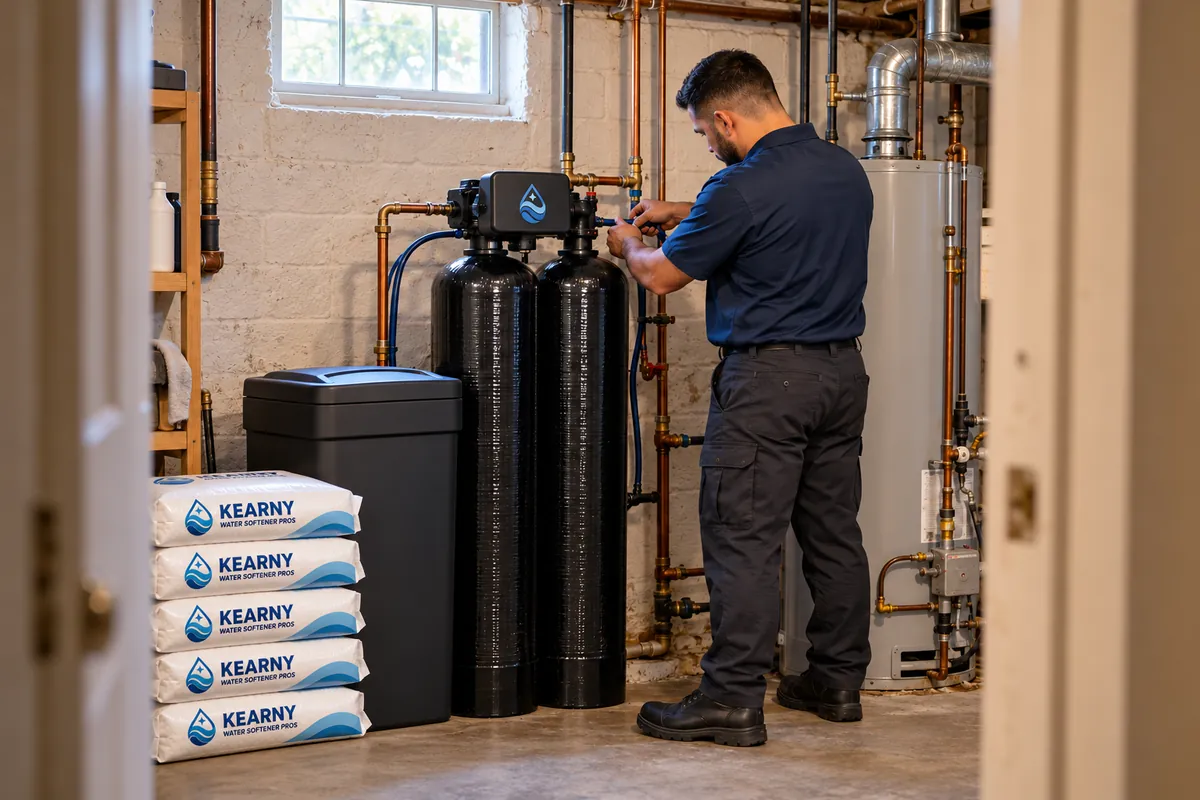
Our team brings local experience and technical skill to water softener repair and maintenance in Kearny, NJ, backed by relevant certifications and hands-on work with major brands and complex systems.
These are the softener faults Kearny homeowners describe when they call for repair or maintenance, from standing water in the brine tank to a salty taste at the tap.
Hearing one of these at your place? Call (201) 365-5543. We answer 24/7.
Most water softeners in Kearny benefit from servicing every 12 months to prevent salt bridging and resin bead degradation. Regular maintenance ensures optimal performance and compliance with local plumbing codes.
The usual causes are a salt bridge (a hard crust over empty space in the brine tank), a clogged injector or screen, a blocked brine line, or a control valve that no longer enters the brine cycle. A clock reset by a power outage can also skip regenerations. The technician checks these in order and shows you what failed.
The cost of water softener maintenance in Kearny, NJ depends on system size and complexity. Plans with regular inspections can reduce unexpected repair costs over time. You hear the price before any work starts.
Yes. Emergency water softener repair in Kearny is available 24/7. Our licensed technicians answer 24/7 for issues like system leaks or control valve failures to limit damage and restore service.
We repair most residential brands, including Fleck, Pentair, Culligan, Whirlpool and Kenmore units. If a part is no longer made, we explain the options, such as a new control valve on the existing tank or a full replacement, before any work starts.
The technician cleans the brine tank and injector, checks the float and brine line, inspects the control valve seals, tests hardness before and after the softener and confirms the settings still match your water and household. Deeper cleaning and sanitizing is added if the tank shows sludge or odor.
Usually, yes. Most faults, like a salt bridge, a clogged injector, worn valve seals or a failed motor, are routine repairs. Replacement makes more sense when the resin tank leaks, parts for the valve are no longer made or several major parts fail at once. We explain both options and the price before any work starts.
Many softeners keep a small amount of water in the bottom of the brine tank to make brine, so some water is normal. A tank that is half full or more usually means the softener is not drawing the brine out. The usual causes are a clogged injector or screen, a kinked brine line, a stuck float or a blocked drain line.
The control valve is either stuck in a regeneration cycle or worn seals and spacers are letting water bypass to the drain. A failed motor or timer can also leave the valve parked mid-cycle. Turn the bypass valve to bypass if water is being wasted, then call for a repair.
Hard water comes back soon after a regeneration even though the softener is using salt, or small resin beads show up in faucet aerators. The technician tests hardness before and after the softener and checks the resin before recommending a cleaning or a new resin bed.
Yes. We repair commercial and twin-tank softeners for restaurants, laundries, offices and apartment buildings in Kearny, with emergency service 24/7 and work scheduled around your business hours.
Not seeing your question? Call our local team 24/7 to talk through urgency, timing, and what to expect.
Call our local team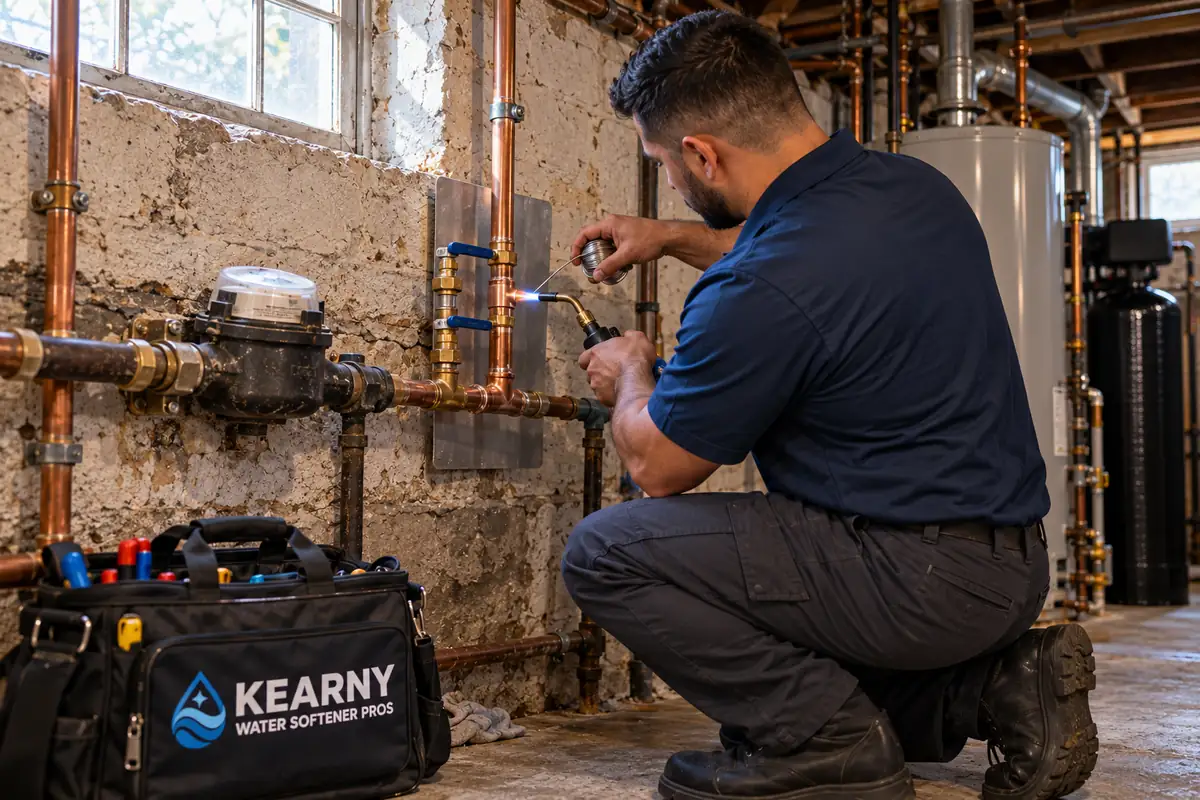
New system installations complement repair services by ensuring your water softener is properly sized and code-compliant for Kearny homes.
View service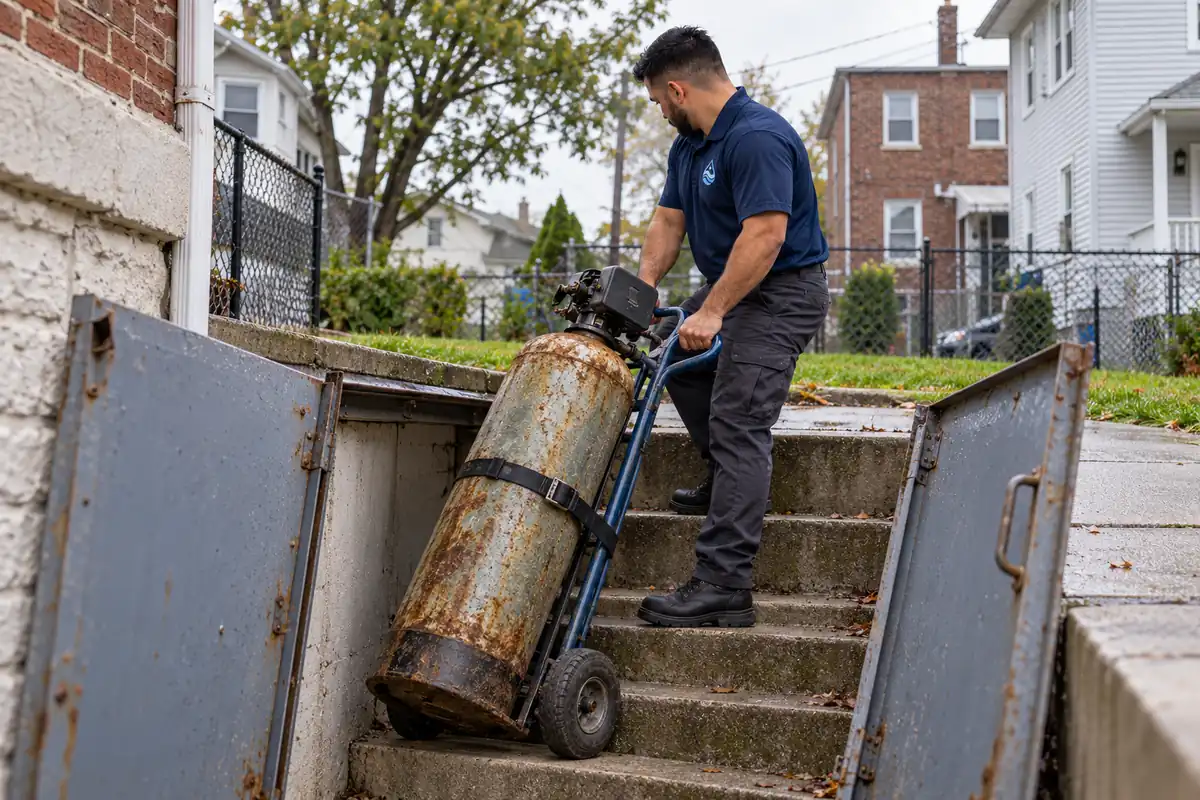
Upgrading outdated systems improves efficiency and integrates modern controls, reducing future repair needs.
View service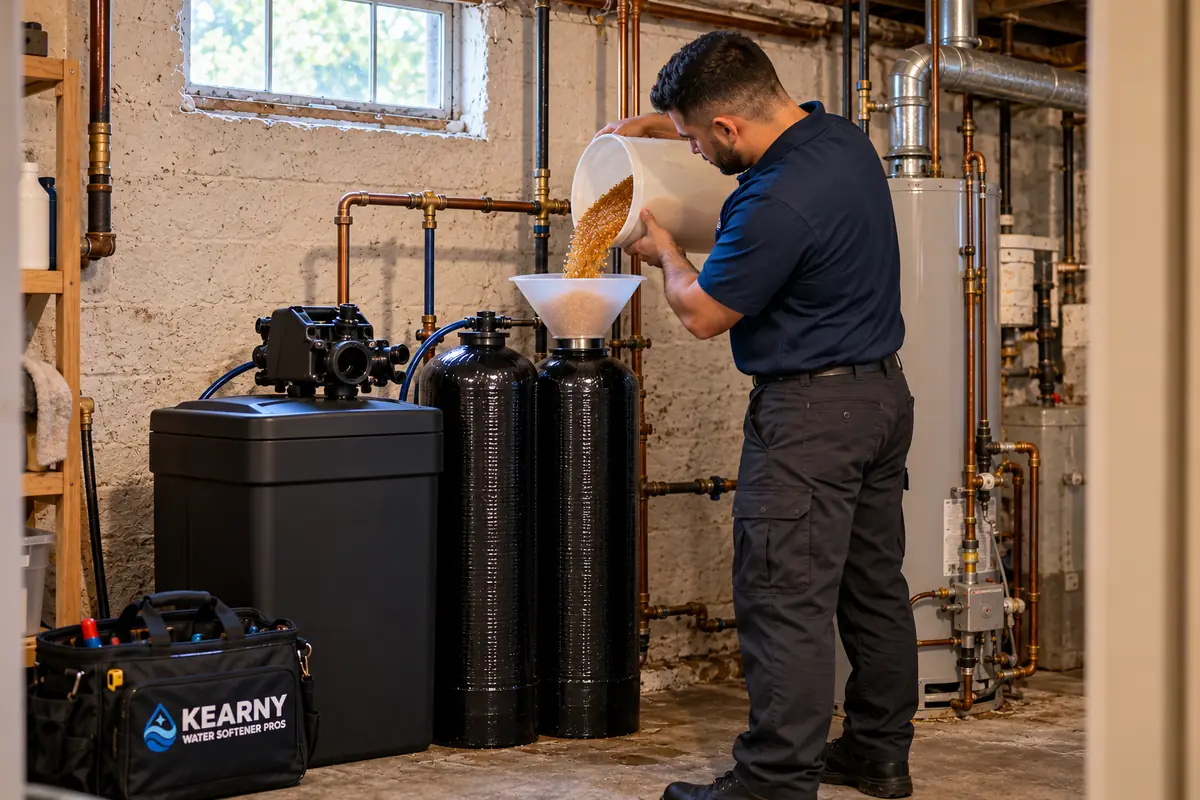
Replacing ion exchange resin restores system effectiveness when degradation reduces softening capacity.
View service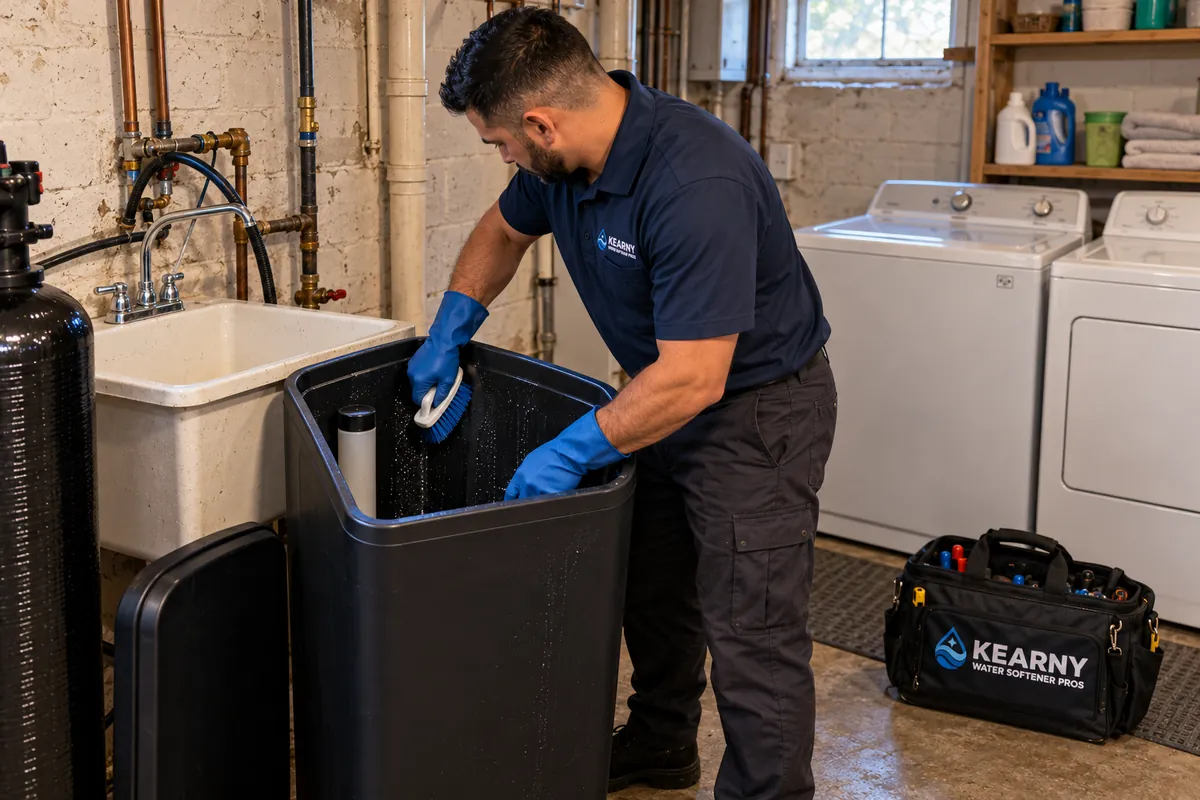
Deep cleaning removes scale and bacteria buildup, essential for maintaining water quality and system longevity.
View service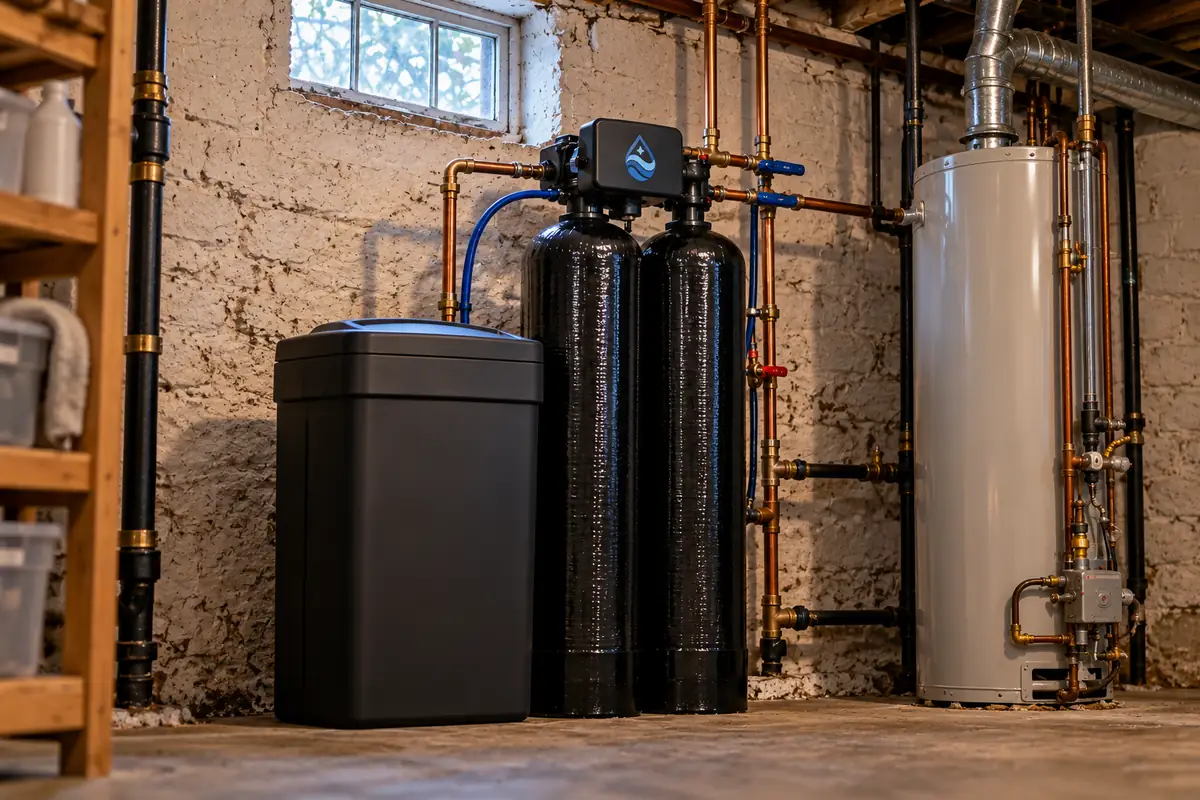
Call anytime for water softener installation or water treatment service. We are open 24 hours a day, 7 days a week, including weekends and holidays. Expect a fast answer and a clear next step.
A quick summary on the call helps us plan the right work for your Kearny home.