Clear arrival times
We keep you posted on when to expect us.
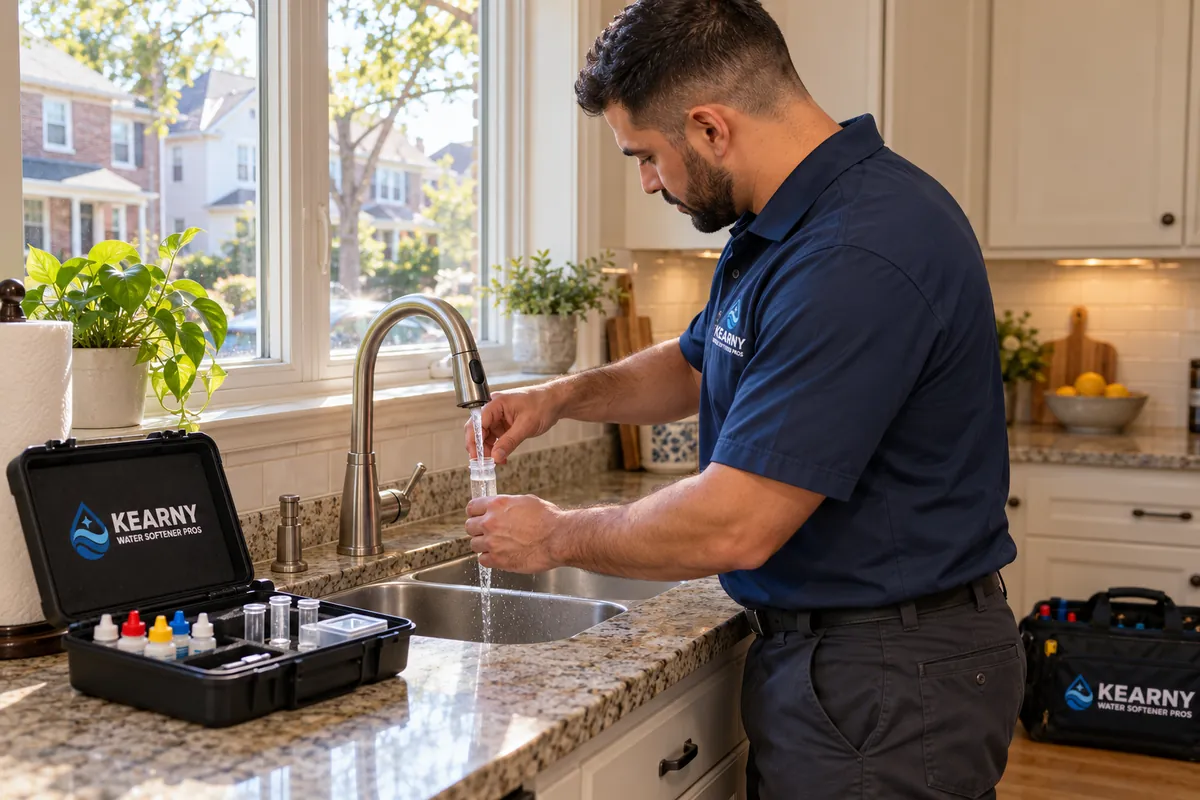
Hard water testing in Kearny, NJ, tells you exactly what is in your supply: how many grains of hardness, how much iron and manganese, and whether your softener is keeping up. You get the numbers, what they mean for your pipes and appliances, and the fix. We answer 24 hours a day, so call now.
We keep you posted on when to expect us.
Review the approach and price before deciding.
Equipped vehicles and respectful cleanup.
Neighbors helping neighbors, from the first call to the final check.
Our service covers comprehensive testing of water hardness, mineral content, and common contaminants. Additional specialized tests are available upon request to address unique water quality concerns.
Using water hardness test kits, we measure calcium and magnesium concentrations to assess scale risk and softener needs.
We test for iron and manganese levels that cause staining and odor, essential for selecting removal systems.
We check pH and chlorine on site and arrange certified lab testing for lead when it is needed.
Clients receive clear, actionable reports including hardness levels, system recommendations, and compliance notes.
Tell us what is happening and a local water treatment technician will give you a clear next step, day or night.
Water testing and hardness analysis in Kearny, NJ is a critical diagnostic service that measures mineral content, contaminants, and hardness in your water supply. We collect samples and use tools like water hardness test kits and flow meters to evaluate ion exchange resin efficiency and detect issues such as hard water scale buildup.
Kearny customers often ask for a water quality inspection when they see scale, rust-colored stains or a softener that has stopped working, for example because of a salt bridge in the brine tank. Affordable water hardness testing helps homeowners and businesses keep their systems performing and comply with local plumbing codes, especially in neighborhoods like Kearny Central and South Kearny.
Kearny's town water is treated reservoir water from the North Jersey District Water Supply Commission system, not well water. So a test here is less about the source and more about two things: how hard the water is, and what your building's pipes, water heater and fixtures add on the way to the tap.
The U.S. Geological Survey calls water up to 60 mg/L (as calcium carbonate) soft, 61 to 120 moderately hard, 121 to 180 hard and above 180 very hard. Softeners are set in grains per gallon, and one grain equals about 17.1 mg/L, so we give you both numbers.
The EPA's secondary guideline is 0.3 mg/L for iron, where rusty color, metallic taste and orange stains start, and 0.05 mg/L for manganese, which leaves black or brown stains. On city water, a high reading usually points to old galvanized pipes or a corroding water heater, and the fix is often iron and manganese removal.
Water below a pH of 6.5 can taste metallic and slowly eat into copper lines, which is what leaves blue-green stains under faucets. The EPA's comfortable range is 6.5 to 8.5, and we test pH on every visit.
Town water carries a disinfectant all the way to your faucet, which is why some kitchens taste like a pool. Testing for chlorine and sediment tells us whether a carbon or sediment filter is the right fix, or whether a softener alone will do.
New Jersey's 2021 lead service line law requires water systems to replace lead service lines, with a 2031 deadline, and it counts galvanized service lines as lead. If your home is older or you do not know what your service line is made of, we can arrange a certified lab test for lead, and a reverse osmosis system at the kitchen sink is one way to reduce it.
If you already have a softener, we test before and after it. Hard water after the softener points to a salt bridge, spent resin or a valve setting, which is a job for troubleshooting or calibration, not new equipment.
Kearny's water system publishes a yearly report on what it measured, and the EPA explains how to read a yearly water quality report. It is a good overview of the town supply, but only a test at your own tap shows what reaches your glass. We test homes in Kearny Central, Arlington and every other part of town. Call (201) 365-5543, 24/7.
Is New Jersey water hard? It depends on where the water comes from. Well water from some New Jersey aquifers is hard and from others is soft, and homes on town water get whatever their utility's source delivers. The public sources below give the background, and a water hardness test at your own tap gives the number for your home.
A statewide U.S. Geological Survey study of New Jersey ground water found that calcium, magnesium and bicarbonate are the main dissolved minerals in most of it, the same minerals that make water hard. Some New Jersey aquifers give hard water and others soft, so well water varies a lot from place to place.
The Town of Kearny gets all of its water from the North Jersey District Water Supply Commission. It comes mainly from the Wanaque and Monksville reservoirs, with water pumped in from the Pompton and Ramapo rivers when needed, and it is filtered and treated at the commission's plant in Wanaque. A Kearny home on town water drinks treated reservoir water, not well water.
The town's 2024 drinking water quality report says iron and manganese were not detected. It lists a chlorine disinfectant residual, orthophosphate added for corrosion control and pH readings from 7.0 to 8.0 in the distribution system. It does not give a hardness figure, which is one more reason to measure hardness at your tap before you choose or set a softener.
The New Jersey Department of Environmental Protection lists hardness as a secondary drinking water standard, with a recommended upper limit of 250 mg/L as calcium carbonate. Secondary standards deal with taste, color, odor and similar nuisances rather than health, so hard water is a problem for pipes, water heaters and fixtures, not a safety alarm.
We test hardness at the kitchen tap and, if you already have a softener, before and after it. You get the result in grains per gallon and in mg/L, with its place on the USGS scale (soft, moderately hard, hard or very hard), so you can compare it with the sources above. We test in every Kearny neighborhood, from Kearny Central to South Kearny.
A softener for town water is set up differently from one for a private well, where hardness, iron and sediment come straight from the ground. If you are moving to Kearny from a home on a well, test before you reuse an old softener or its settings, so the new water softener installation matches the water you have now.
Hard water spots or stains at your tap? A Kearny water technician can test it and explain the result. Call (201) 365-5543, 24/7.
A licensed technician assesses your property in Kearny, NJ, discussing water concerns and planning sampling points. This step typically takes 15-30 minutes and includes reviewing water softener system history.
Water samples are collected from key points, such as kitchen taps and the softener outlet, and checked with certified water hardness test kits. This step usually takes under an hour and follows OSHA safety standards.
The technician reads hardness, iron, manganese, pH and chlorine at your tap during the same visit and explains what the numbers mean. Only lead testing goes to a certified laboratory.
Clients receive a comprehensive report outlining hardness levels, potential issues like salt bridging, and recommended solutions. It also notes how your softener performs against NSF/ANSI 44 standards.
Based on the findings, technicians advise on water softener calibration, resin replacement, or filtration upgrades. Emergency water testing is available 24/7 for urgent cases.
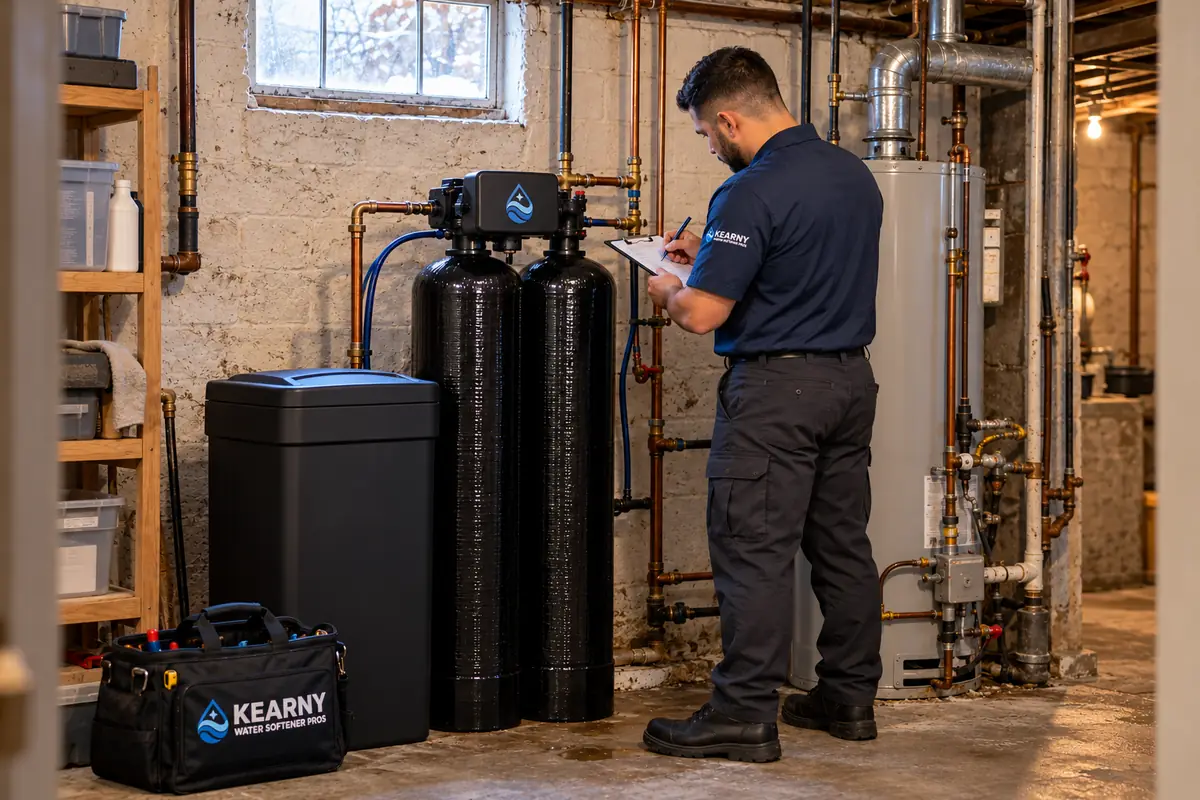
Measures calcium and magnesium concentrations to assess hardness levels.
Monitors water flow rates to detect pressure drops linked to scale buildup.
Measures how acidic or alkaline the water is, which affects pipes and fixtures.
Shows whether rust-colored or black stains come from the water itself.
Measures the disinfectant in town water, which slowly wears down softener resin.
Ensures water softener performance meets certified hardness reduction levels.
Guides testing protocols for lead and copper contaminants in municipal water.
Evaluates resin bead condition to maintain effective mineral removal.
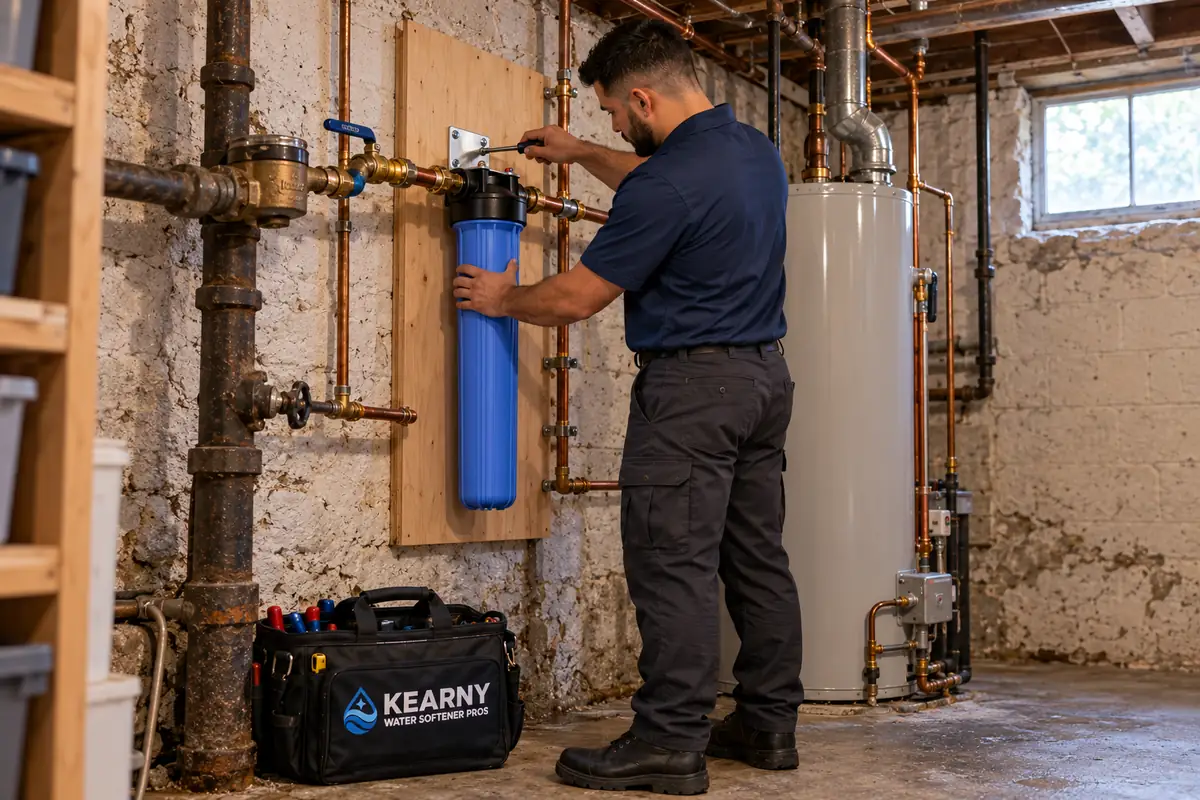
We perform water hardness testing and inspect resin tanks to diagnose and correct the issue. Water flow is restored, and less scale damage means longer appliance life.
A full water quality inspection identifies iron levels and leads to a targeted filtration system installation. The result is clearer water and compliance with health standards.
We provide rapid water testing and hardness analysis to detect contaminants and recommend immediate treatment, restoring safe, clean water quickly to avoid health risks.
Water testing in Kearny starts from what we know about the town supply: one treated reservoir source shared across town. What changes from house to house is the plumbing. An older service line, galvanized or mixed piping, an aging water heater or a softener that has drifted out of adjustment can all change what comes out of the tap. That is why we test at your faucet instead of relying on a town average, and why every recommendation follows New Jersey plumbing code.
Pipes, solder and the water heater can add iron, copper or lead, so we test those as well as hardness.
We test before and after the unit to see whether it still removes hardness.
Kitchens, offices and other businesses get tests that size equipment for heavier daily use.
A quick test shows whether sediment, rust or a change in taste needs treatment or will clear on its own.
A South Kearny home suffered from heavy scale buildup causing low water pressure and appliance damage.
After water hardness testing and resin replacement, water pressure improved, and scale was eliminated from pipes.
Maintenance: Water hardness testing every 6 months helps prevent recurrence and maintains system efficiency.
A Riverside business had rust stains and a foul odor from iron coming off the building's old pipes and water heater.
Water quality analysis led to iron filter installation, eliminating stains and improving water taste within two weeks.
Maintenance: An annual water quality inspection keeps iron levels under control.
After a storm, a Kearny Central residence had cloudy, unsafe water with unknown contaminants.
Emergency water testing identified the contaminants quickly; filtration and softener adjustments restored safe water within 48 hours.
Maintenance: Post-storm water testing is recommended to catch contamination early.
Our affordable water hardness testing in Kearny, NJ addresses specific issues that impact plumbing and water quality across Hudson County.
Leads to reduced water flow, higher energy bills, and premature equipment failure. We identify hardness levels and recommend resin tank maintenance or water softener upgrades to prevent scale and improve efficiency.
Causes unsightly rust-colored stains and an unpleasant taste in water. Our water quality analysis detects iron levels and advises on iron filter installation for stain removal.
Results in inconsistent softening and system malfunctions. Regular hardness testing flags the hardness spikes that point to salt bridging, enabling timely system cleaning and calibration.
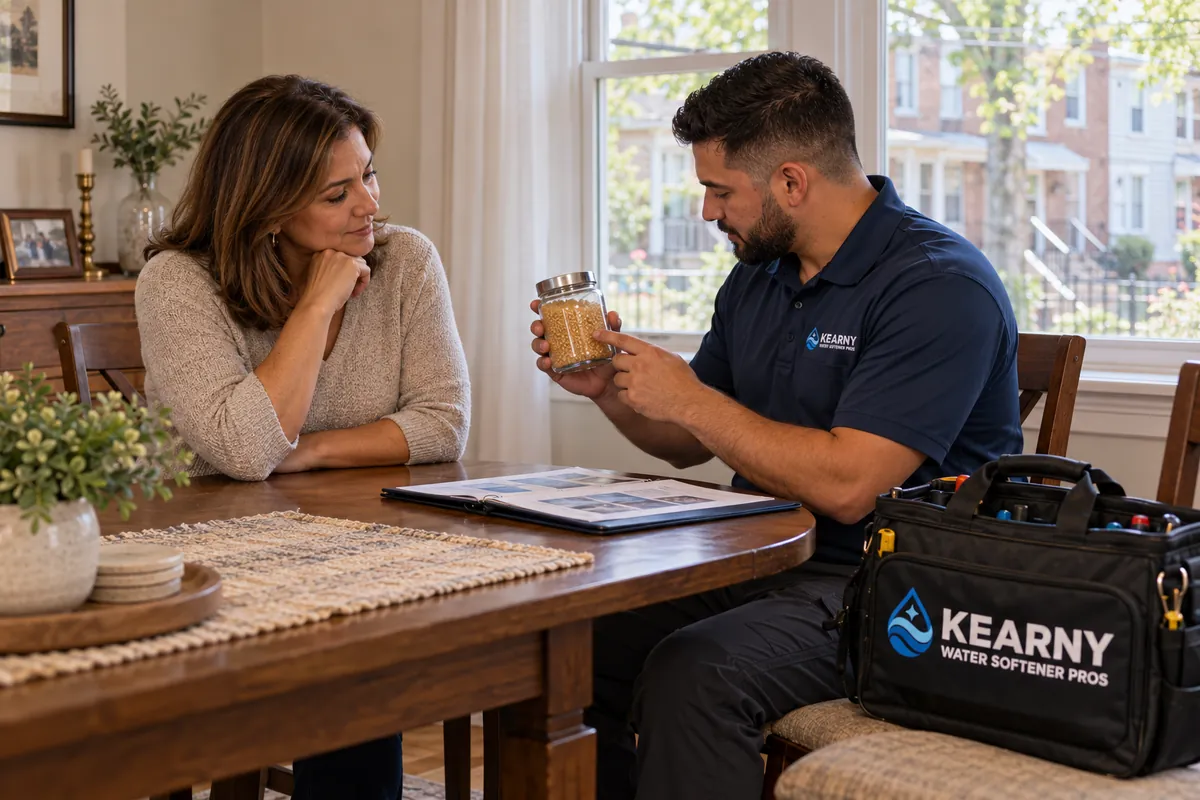
Kearny Water Softener Pros brings local experience and technical knowledge to every water testing and hardness analysis job, ensuring code-compliant, reliable results for Hudson County clients.
Testing usually comes before any equipment. These are the questions and worries Kearny homeowners and new parents describe when they call about water testing and hardness analysis.
Hearing one of these at your place? Call (201) 365-5543. We answer 24/7.
Collect water samples and measure calcium and magnesium levels with a water hardness test kit, or call a professional to do it for you. A professional test usually takes under an hour on site and can also reveal softener problems, such as a salt bridge that stops regeneration.
A water quality analysis in Kearny includes testing for hardness, iron, manganese, pH levels, and contaminants. Our professional water testing service provides detailed reports and recommendations for improving water safety and system performance.
Yes. We provide water testing and hardness analysis in Kearny, NJ with licensed technicians, specialized tools, and fast turnaround times, plus emergency water testing when you need it urgently.
Water hardness analysis is important in Kearny to prevent hard water scale buildup, iron staining, and damage to plumbing. It helps optimize water softener performance and maintain compliance with local plumbing codes.
We do not quote a single town number, because the reading that matters is the one at your tap. Kearny's water comes from the North Jersey District Water Supply Commission's reservoir system, and the town's 2024 water quality report does not list a hardness figure. We test hardness on site and show you where it falls on the USGS scale: soft up to 60 mg/L, moderately hard from 61 to 120, hard from 121 to 180 and very hard above 180.
Town water is tested by the utility, but those samples are taken in the system, not at your faucet. Your pipes, water heater and fixtures can add iron, copper or lead, and a softener can drift out of adjustment. A test at your tap shows what is really in your water and whether any equipment is needed.
Yes. Our on-site test covers hardness, iron, manganese, pH and chlorine. For lead, we arrange testing by a certified laboratory, which is the reliable way to measure it. It is worth doing in older homes, homes with a galvanized or unknown service line, and homes with babies.
Test before buying any treatment equipment, after a softener or filter is installed or serviced, after plumbing work or a nearby main break, and whenever the taste, color or staining changes. If you have a softener, a quick hardness check once a year shows whether it is still keeping up.
Some of it does. A statewide U.S. Geological Survey study found hard ground water in the Newark Group and glacial valley-fill aquifers, moderately hard water in several others and soft water in aquifers such as the Kirkwood-Cohansey. Homes on town water get whatever their utility's source delivers, so a test at your tap is the only way to know for your home.
The Town of Kearny's 2024 water quality report says iron and manganese were not detected. If you see rust-colored or black stains, old galvanized pipes, a water heater or a softener problem is the more likely cause, and a test at your tap shows which one.
New Jersey's recommended upper limit for hardness is 250 mg/L as calcium carbonate, a secondary standard based on nuisance effects rather than health. On the USGS scale, water above 120 mg/L is already rated hard, so we show you both and talk through whether a softener makes sense.
Call us at (201) 365-5543. We test at your tap anywhere in Kearny, NJ 07032, including Kearny Central, Arlington, West Kearny and South Kearny, and our phone line is open 24/7.
Not seeing your question? Call our local team 24/7 to talk through urgency, timing, and what to expect.
Call our local team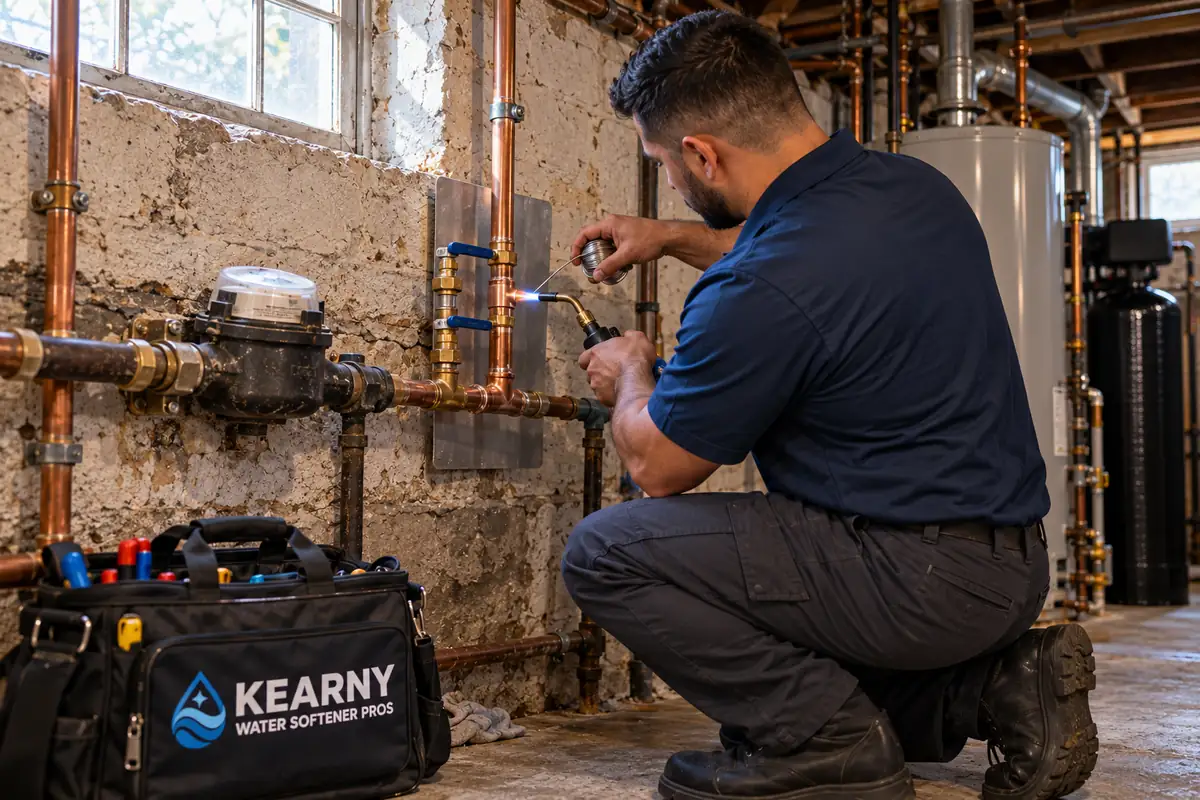
Proper water testing informs water softener installation in Kearny, ensuring the system matches local hardness levels and water quality for effective conditioning.
View service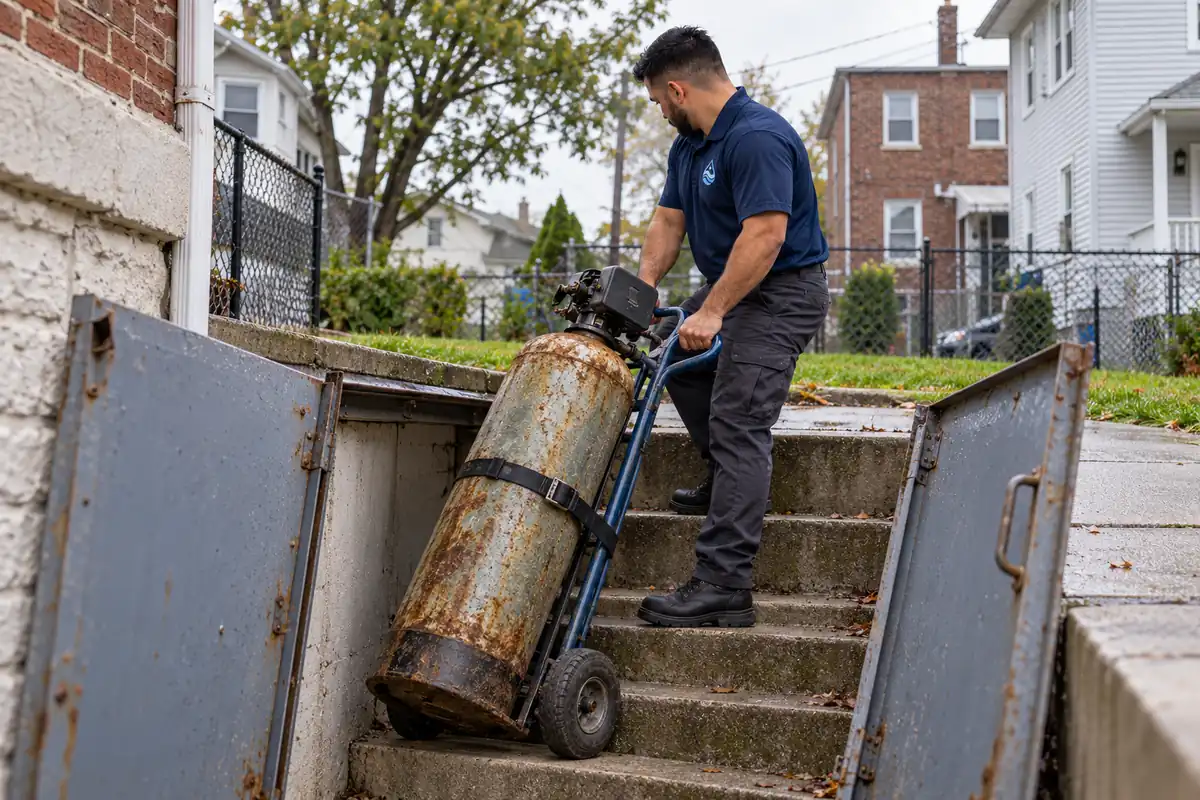
Testing results guide replacement and upgrade decisions, helping Kearny residents select systems that address specific hardness and contaminant profiles.
View service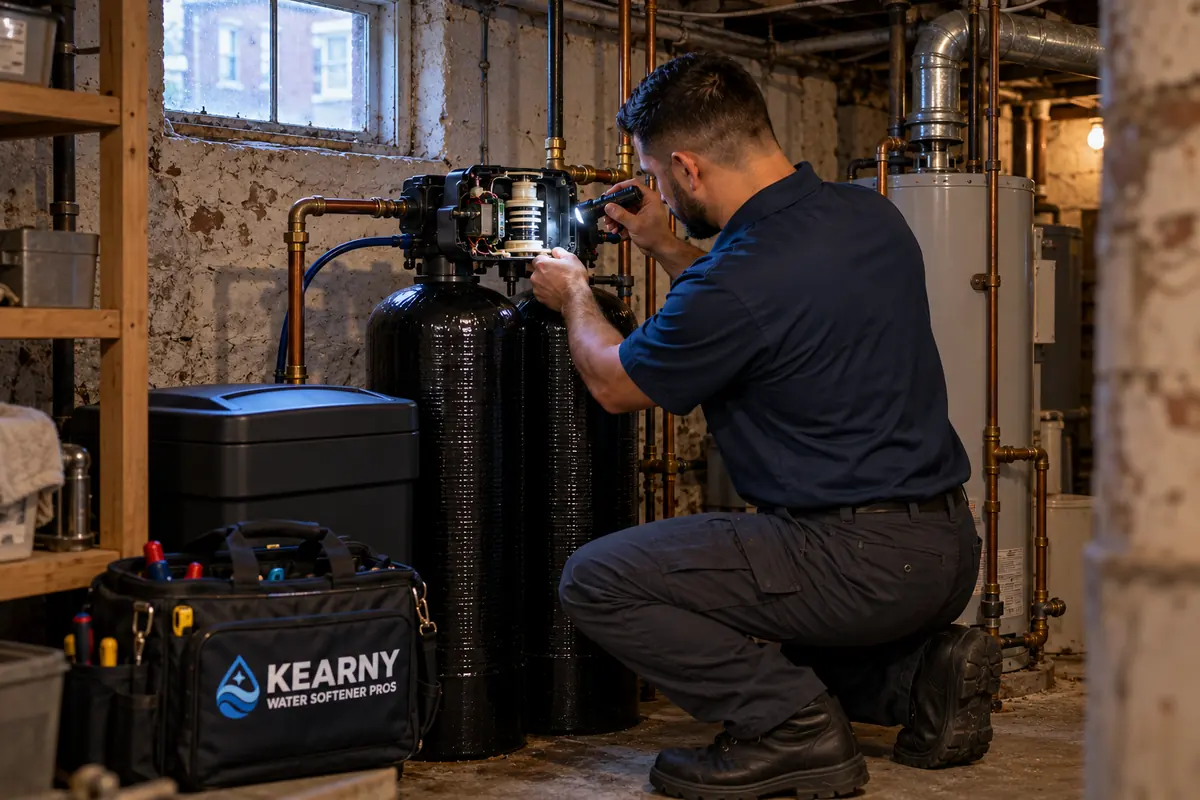
Regular hardness testing supports repair and maintenance by identifying resin bead degradation or control valve malfunctions early.
View service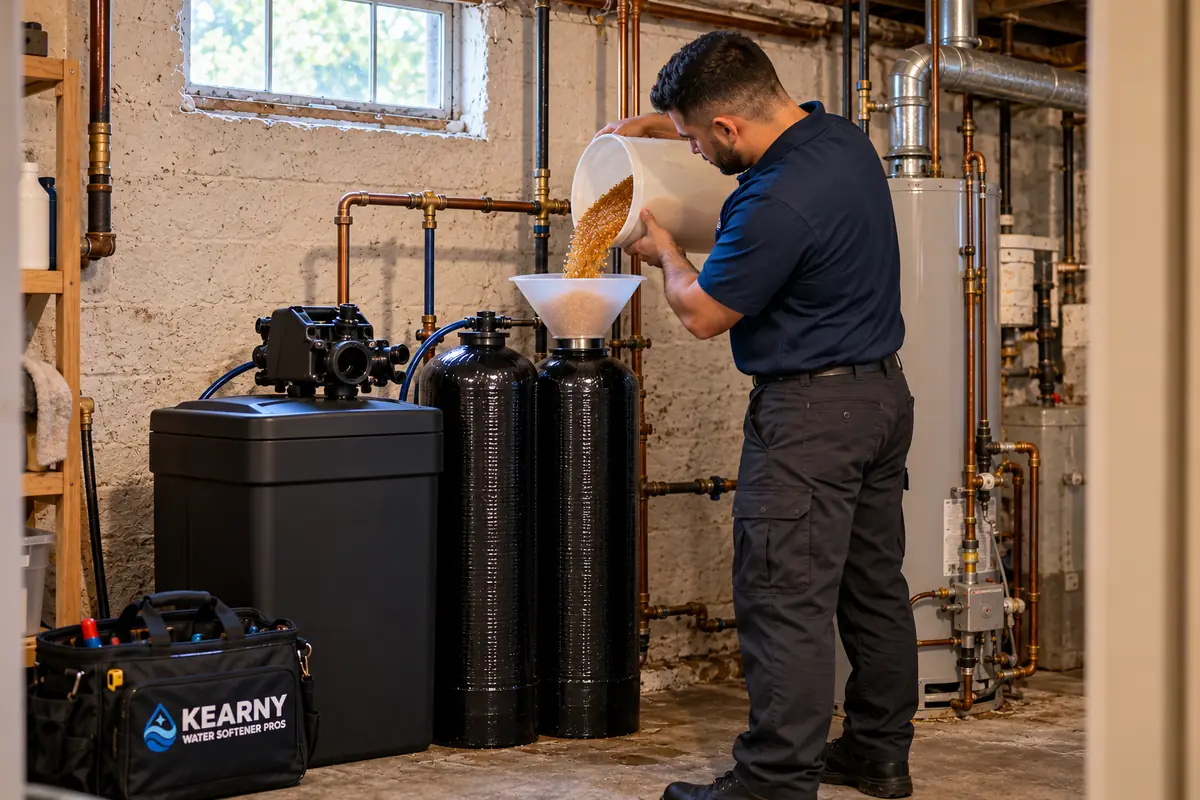
Water hardness testing shows when resin replacement is needed to maintain ion exchange efficiency and water softness.
View service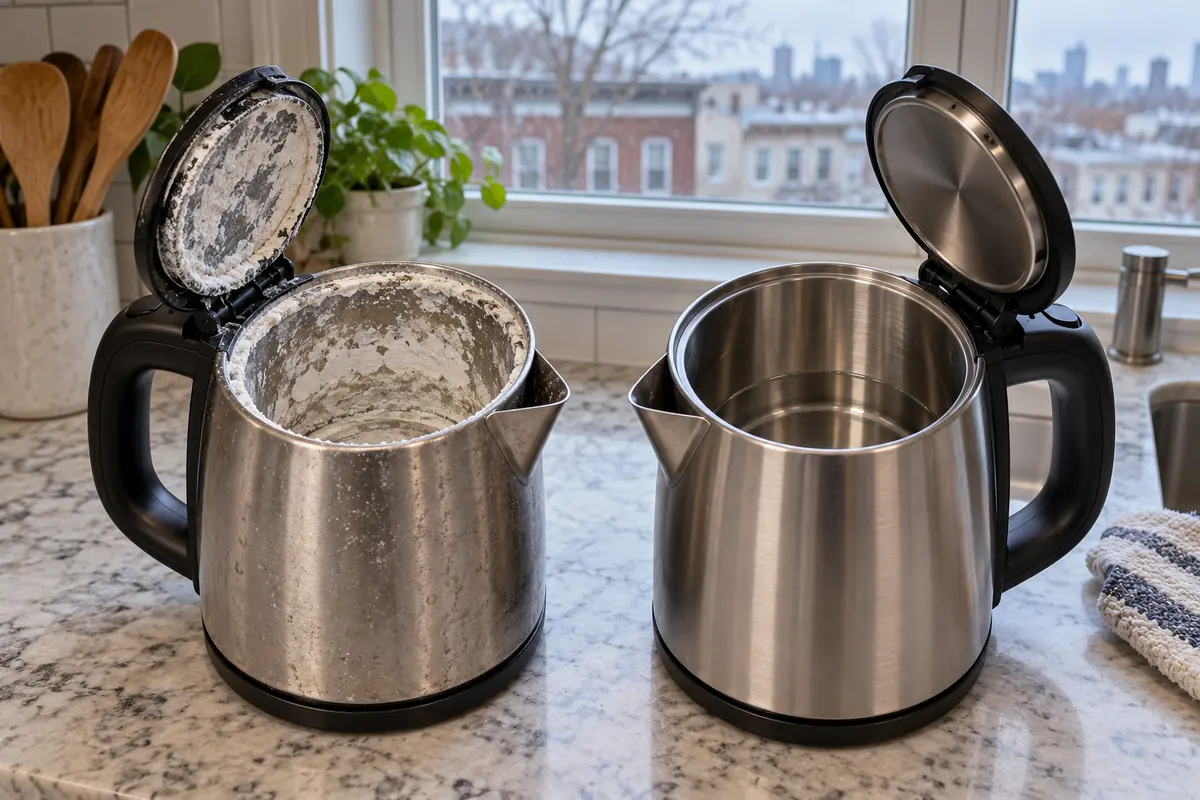
Call anytime for water softener installation or water treatment service. We are open 24 hours a day, 7 days a week, including weekends and holidays. Expect a fast answer and a clear next step.
A quick summary on the call helps us plan the right work for your Kearny home.