Clear arrival times
We keep you posted on when to expect us.
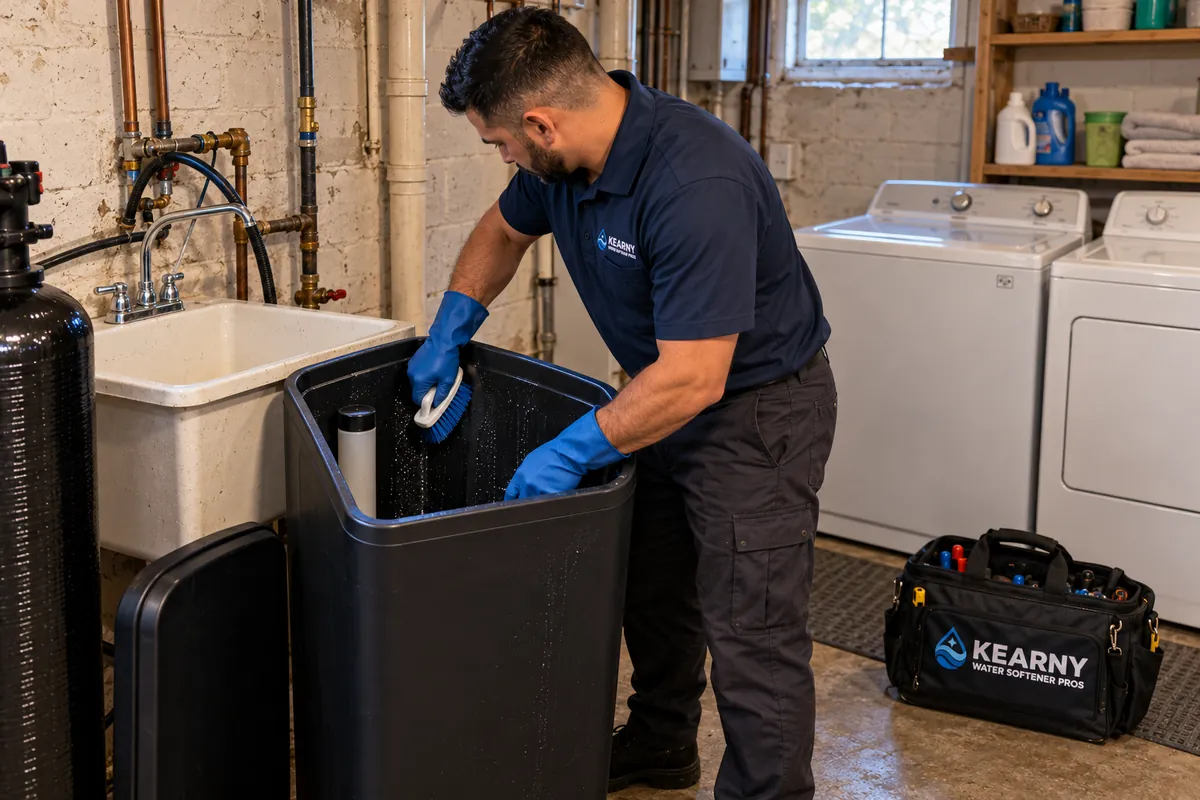
Water softener system cleaning and sanitizing in Kearny, NJ removes hard water scale and contaminants that slow your system down. We clean resin tanks, brine tanks, and control valves for homes and businesses 24/7, restoring efficiency and water quality. Call now to reach a local technician.
We keep you posted on when to expect us.
Review the approach and price before deciding.
Equipped vehicles and respectful cleanup.
Neighbors helping neighbors, from the first call to the final check.
Our cleaning and sanitizing service in Kearny covers the critical components and processes that restore system function. Optional add-ons like resin replacement or advanced filtration installation are available separately.
Removal of scale and biofilm buildup inside the resin tank to restore ion exchange efficiency.
Disinfection of the brine tank using EPA-approved agents to eliminate bacteria and prevent odors.
Inspection and cleaning of the control valve to ensure proper regeneration cycles and water flow.
Use of water hardness test kits before and after service to verify system effectiveness.
Checking and cleaning the brine injector to prevent clogs and keep brine draw steady.
Tell us what is happening and a local water treatment technician will give you a clear next step, day or night.
Water softener system cleaning and sanitizing in Kearny, NJ is a maintenance service that removes accumulated scale, iron staining, and microbial contaminants from components such as resin tanks, brine tanks, and control valves. The process involves flushing the system, disinfecting with EPA-approved agents, and testing water hardness to ensure optimal ion exchange resin function and brine injector performance.
Even on treated town water, a softener collects dirt of its own. Salt leaves insoluble residue at the bottom of the brine tank, sludge builds up around the brine well, and a unit that sits idle can grow bacteria in the resin bed. Cleaning and sanitizing clears that out, so brine draws cleanly and the water leaving the softener stays fresh. It is also the right first step after basement renovation dust gets into an open brine tank or a musty smell shows up at the taps.
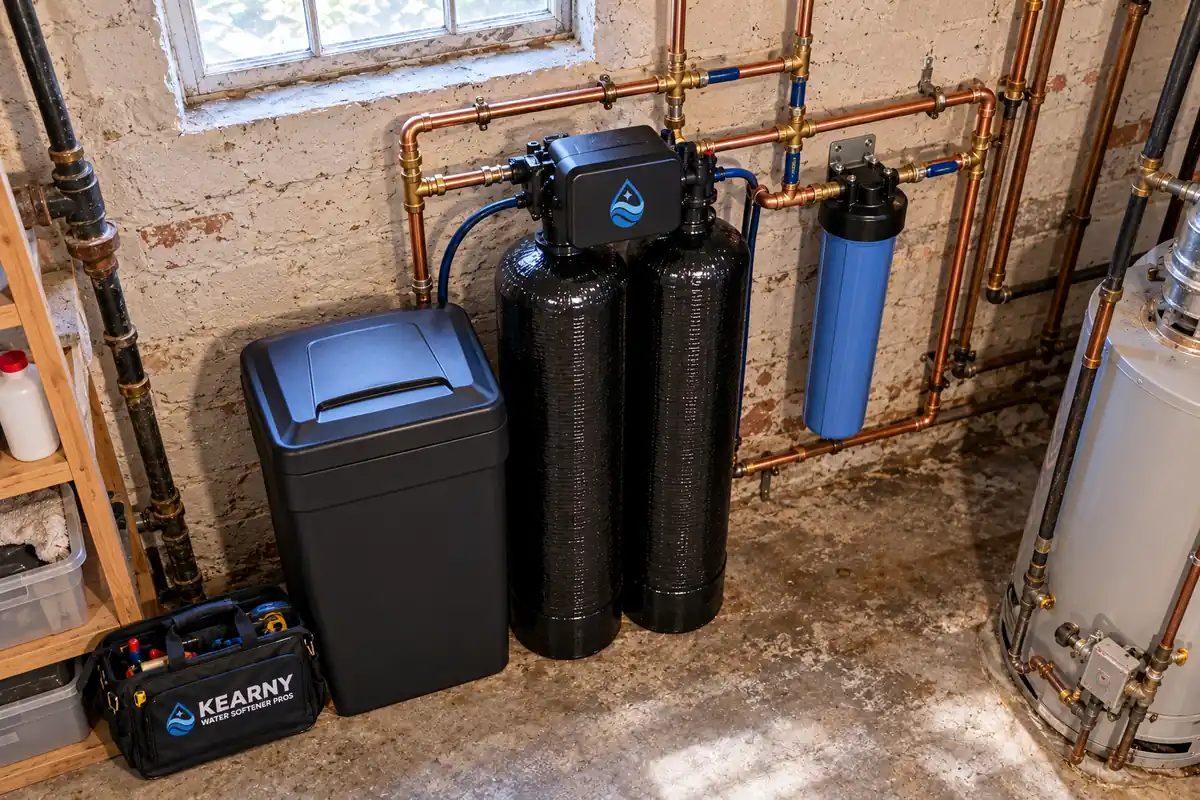
A licensed technician examines the water softener system, including the resin tank, brine tank, and control valve, checking for salt bridging, leaks, and resin condition. This step takes about 30 minutes.
The system is drained and flushed using clean water and specialized tools like flow meters to remove accumulated scale and sediment. This process typically lasts 45 minutes.
EPA-approved disinfectants are applied to sanitize the resin tank and brine tank, eliminating bacteria and biofilm. The treatment is left to act for 20-30 minutes under controlled conditions.
Brine injectors, control valves, and filter cartridges are cleaned or replaced if necessary, ensuring optimal performance and compliance with New Jersey plumbing codes.
Water hardness is tested with a test kit, and the settings are adjusted to the manufacturer's specifications for brands like Fleck or Pentair. The whole procedure usually takes 3-4 hours.
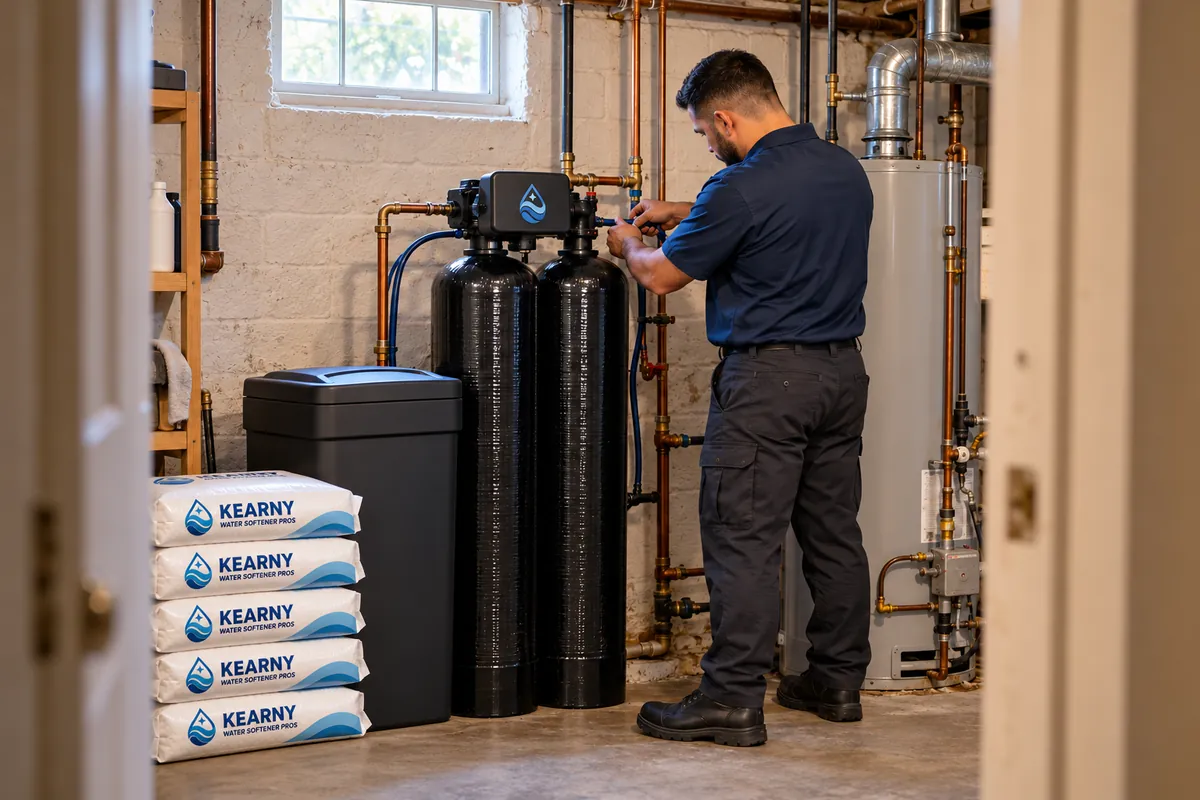
Measures hardness levels before and after cleaning to verify system effectiveness.
Monitors water flow during flushing to ensure proper system rinsing.
Treats water leaving the system to help keep bacteria and biofilm from returning after sanitizing.
Removes clogs and buildup in brine injectors to keep brine draw steady.
Optional filtration to reduce chlorine and organic contaminants post-cleaning.
Application of EPA-registered disinfectants approved for use on water softener components.
Use of high-pressure flushing combined with manual scale scraping to clear mineral deposits.
Adjustment of control valves and regeneration cycles based on water hardness test results.
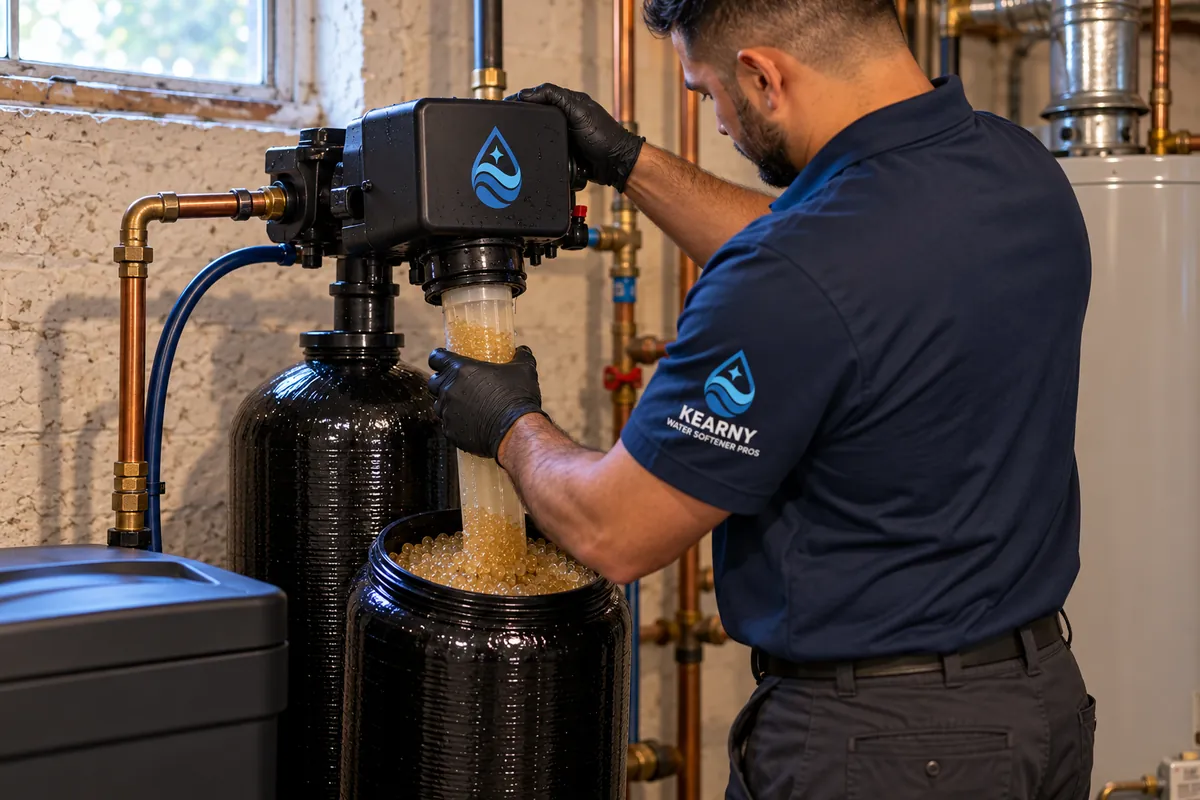
We disinfect and clean the water softener system to remove iron buildup and restore water clarity. Customers see less staining and better-tasting water.
Our professional cleaning includes resin inspection and cleaning to restore flow rates. Water pressure improves, making daily routines easier.
We break up salt bridges during cleaning and educate homeowners on maintenance to prevent recurrence. Salt consumption normalizes, and system regeneration cycles stabilize.
Kearny's town water comes from a treated reservoir supply, so cleaning here focuses on what the softener collects itself: salt residue, brine sludge and biofilm, not the heavy iron and sediment load a private well can bring. Basement units next to floor drains and laundry sinks also pick up dust and debris, so the brine tank lid and the drain line are part of every visit.
We empty the tank, break up any bridge or mush, scrub out the residue and sanitize it before refilling with clean salt.
A sanitizer approved for your unit is drawn through the resin during a regeneration, then rinsed fully to drain before the water goes back into service.
Higher purity pellet salt leaves less residue than rock salt, which means fewer clean-outs. We can tell you which type suits your tank.
A softener that sat idle through a vacancy should be sanitized before new tenants move in. Property managers can book the cleaning together with a settings check.
If the resin is fouled or worn, resin replacement is the next step. Rust-colored stains or a metallic taste call for a water test and possibly iron and manganese removal.
The homeowner noticed a musty smell from the brine tank, sludge at the bottom and soft water running out early.
After cleaning and sanitizing, the smell was gone and the softener regenerated fully again.
Maintenance: We recommend a cleaning and hardness check once a year to keep it that way.
A softener in an Arlington two-family house sat unused for months while one unit was empty.
The resin bed and brine tank were sanitized and the softener ran a fresh regeneration before the new tenants used the water.
Maintenance: After any long stretch without use, have the softener sanitized before the water goes back into service.
A malfunctioning control valve led to excessive salt use and poor softening.
The valve was cleaned and calibrated, reducing salt use and improving water quality.
Maintenance: Annual valve maintenance is included in the cleaning service.
Our cleaning and sanitizing service in Kearny addresses frequent issues that reduce system performance and water quality.
Salt bridging leads to uneven salt usage and poor regeneration, resulting in hard water and potential resin damage. We break up salt bridges during cleaning, ensuring consistent salt flow and preventing resin bead degradation.
Iron deposits stain fixtures and clog resin tanks, reducing softener efficiency and causing leaks. Our sanitizing service removes iron scale and biofilm, restoring water softness and protecting plumbing.
Faulty control valves cause regeneration failures, leading to hard water and high salt consumption. We inspect, clean, and calibrate control valves to meet manufacturer specs, improving system reliability.
Microbial growth can cause odors, water discoloration, and health concerns. Using EPA-approved disinfectants, we sanitize resin and brine tanks to eliminate bacteria and biofilm.
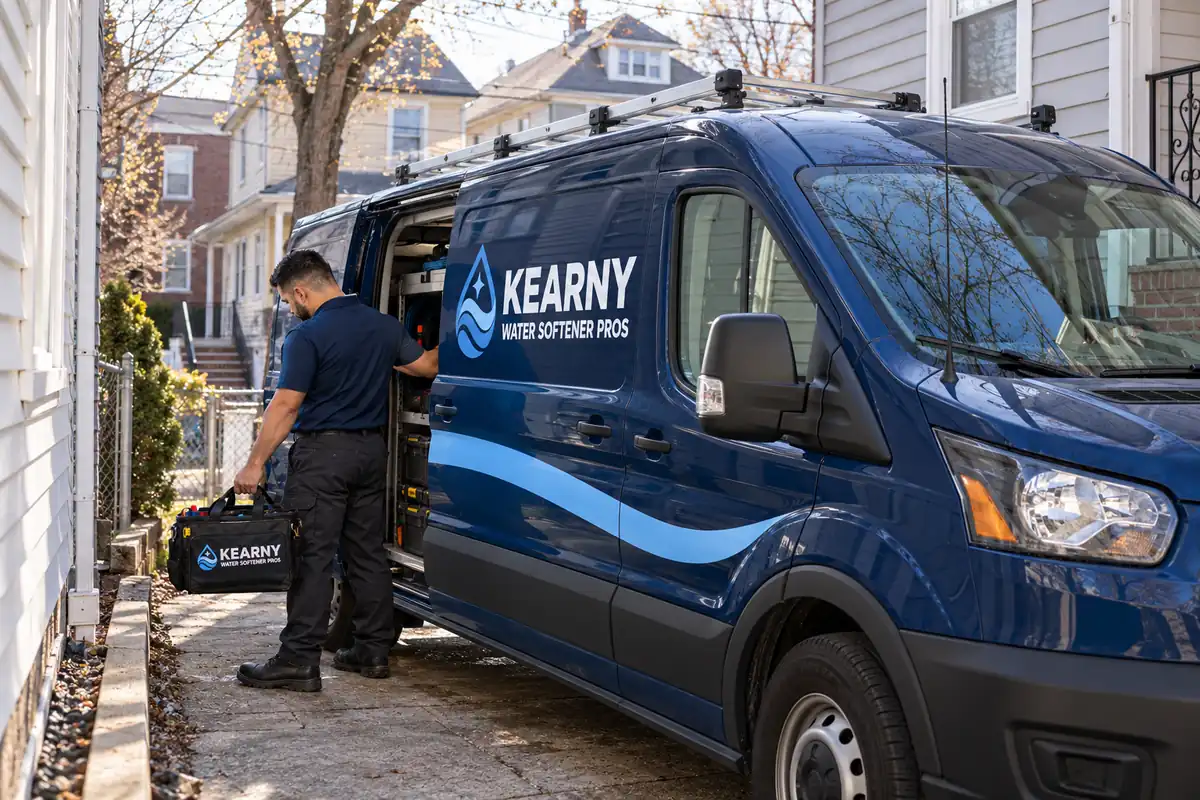
Kearny Water Softener Pros brings local experience and technical training to every water softener cleaning and sanitizing job in Kearny, NJ. Our certified technicians are licensed and insured and follow OSHA safety standards on all jobs.
A softener can work and still need a good cleaning. These are the odors, sludge and idle-system situations Kearny homeowners describe when they call about cleaning and sanitizing.
Hearing one of these at your place? Call (201) 365-5543. We answer 24/7.
Most water softener systems in Kearny, NJ need cleaning and sanitizing once a year to prevent salt bridging and resin wear. Homes with very heavy water use may need it more often.
Water softener sanitizing in Kearny involves draining the system, applying EPA-approved disinfectants to the resin and brine tanks, and flushing contaminants. This process removes bacteria, biofilm, and mineral buildup to restore water quality.
A musty or sour smell usually means bacteria and sludge have built up in the brine tank, often from salt residue and water sitting too long between regenerations. Emptying, scrubbing and sanitizing the tank and the resin bed clears it. If the smell is only in the hot water, the water heater may be the source, and the technician checks that too.
Yes. Regular cleaning and maintenance prevent salt bridging and control valve malfunctions, improving water flow, reducing salt consumption, and extending equipment lifespan.
It depends on the unit. Some manufacturers allow a small amount of plain household bleach for sanitizing, while others call for a dedicated softener sanitizer to protect the resin and valve. We follow the manufacturer's instructions for your model and rinse the system fully before it goes back into service.
You can handle basic upkeep: break up salt bridges, keep the lid on and refill with clean salt before it runs low. A full clean-out means bypassing the unit, removing all the salt, scrubbing and sanitizing the tank and resin, then resetting the system, which is where a technician helps. If the tank is heavy with sludge, call (201) 365-5543.
Not seeing your question? Call our local team 24/7 to talk through urgency, timing, and what to expect.
Call our local team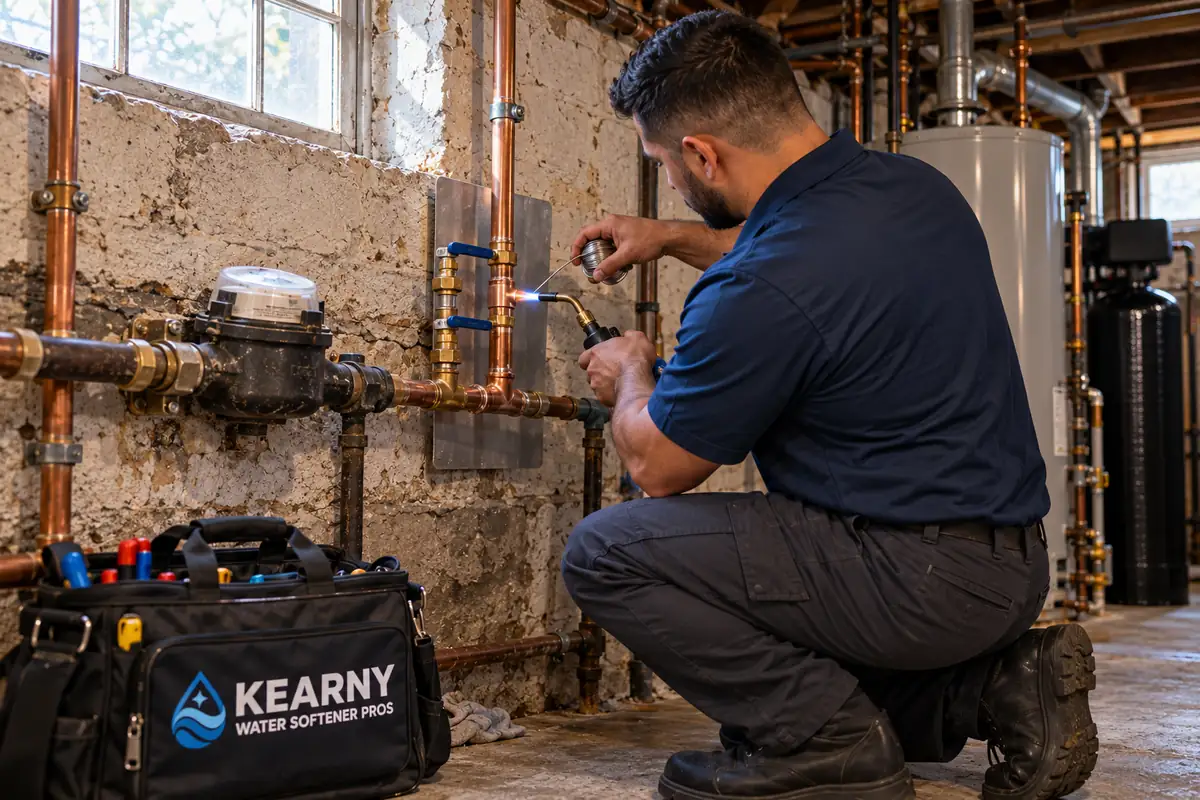
New installations ensure your system starts clean and calibrated, complementing regular cleaning and sanitizing for optimal long-term performance.
View service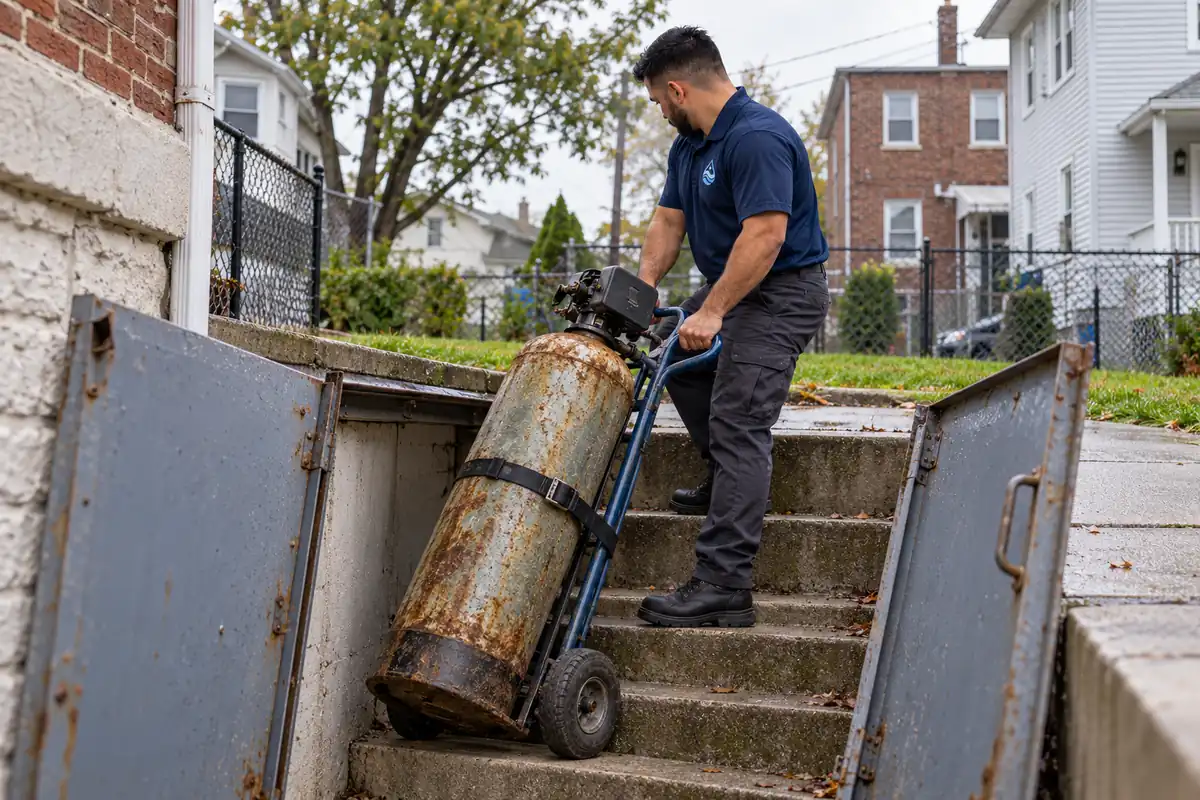
Upgrading old units after cleaning can address resin bead degradation and improve efficiency with modern control valves and brine injectors.
View service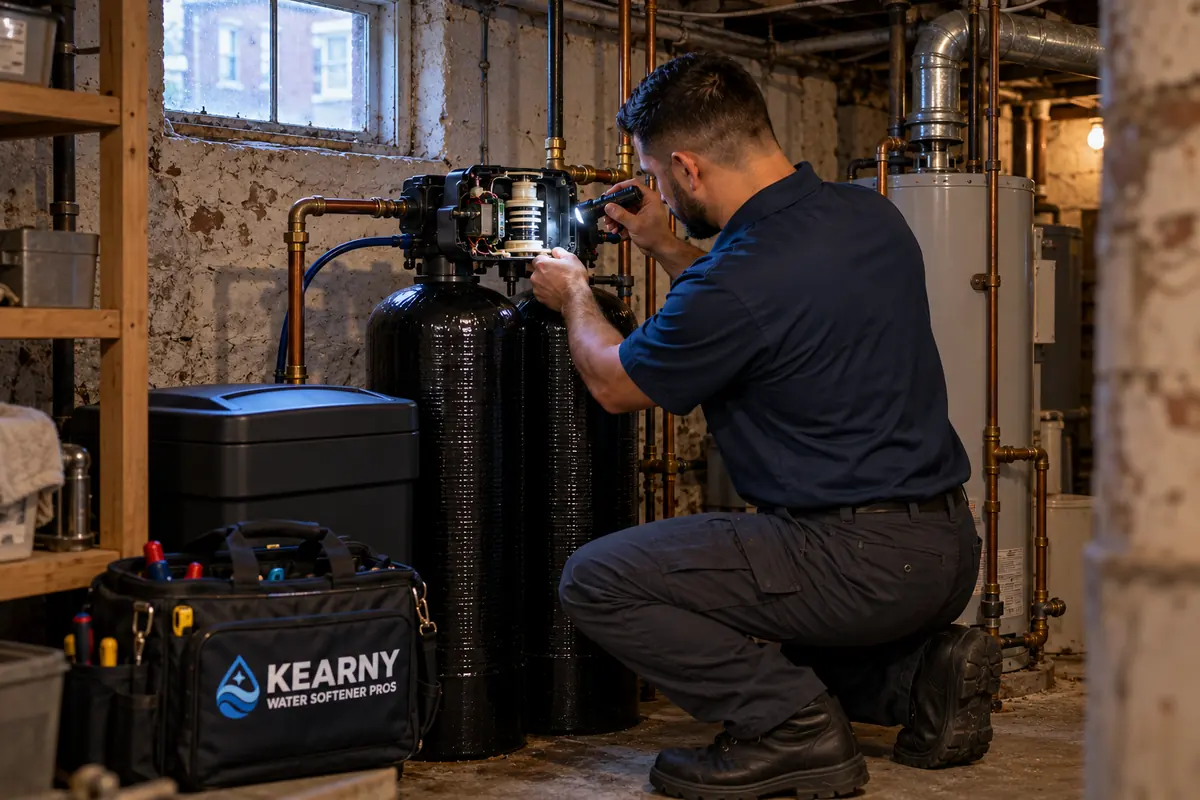
Repairs fix leaks and control valve malfunctions discovered during cleaning, maintaining system integrity and preventing costly downtime.
View service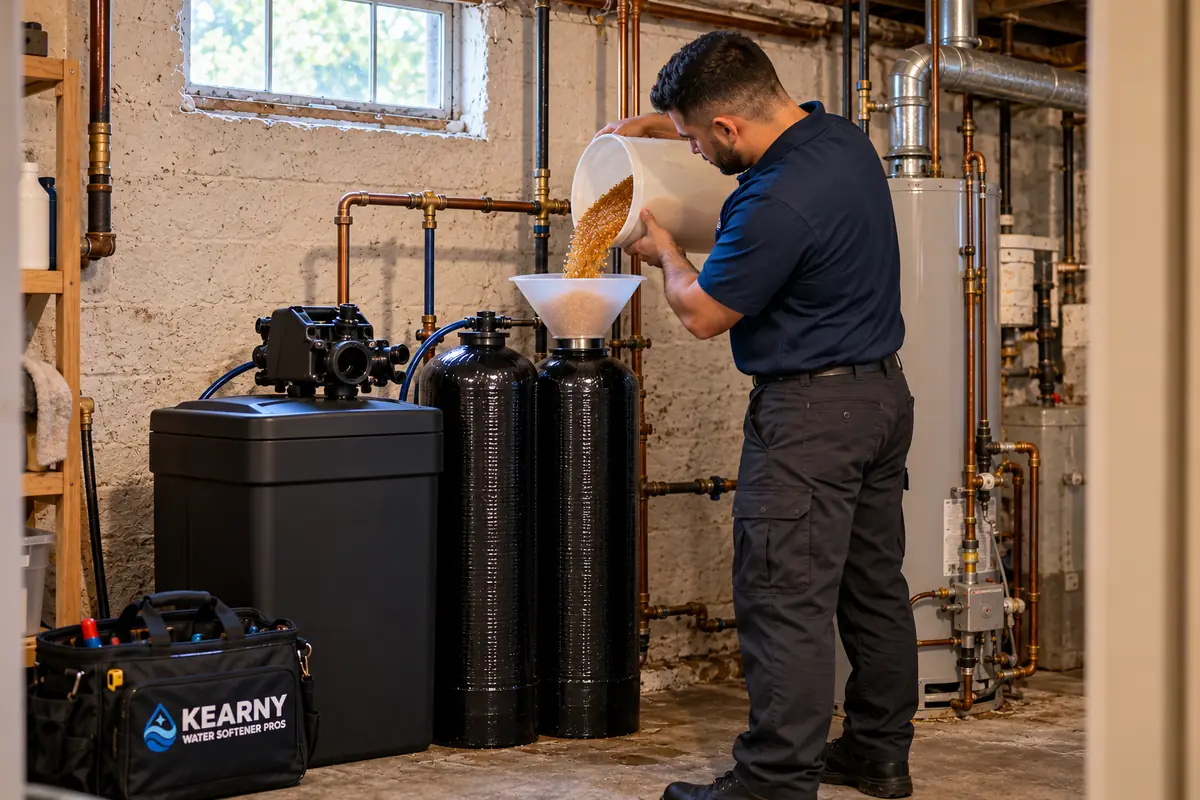
Replacing worn resin beads after cleaning restores ion exchange capacity, critical for keeping your water soft.
View service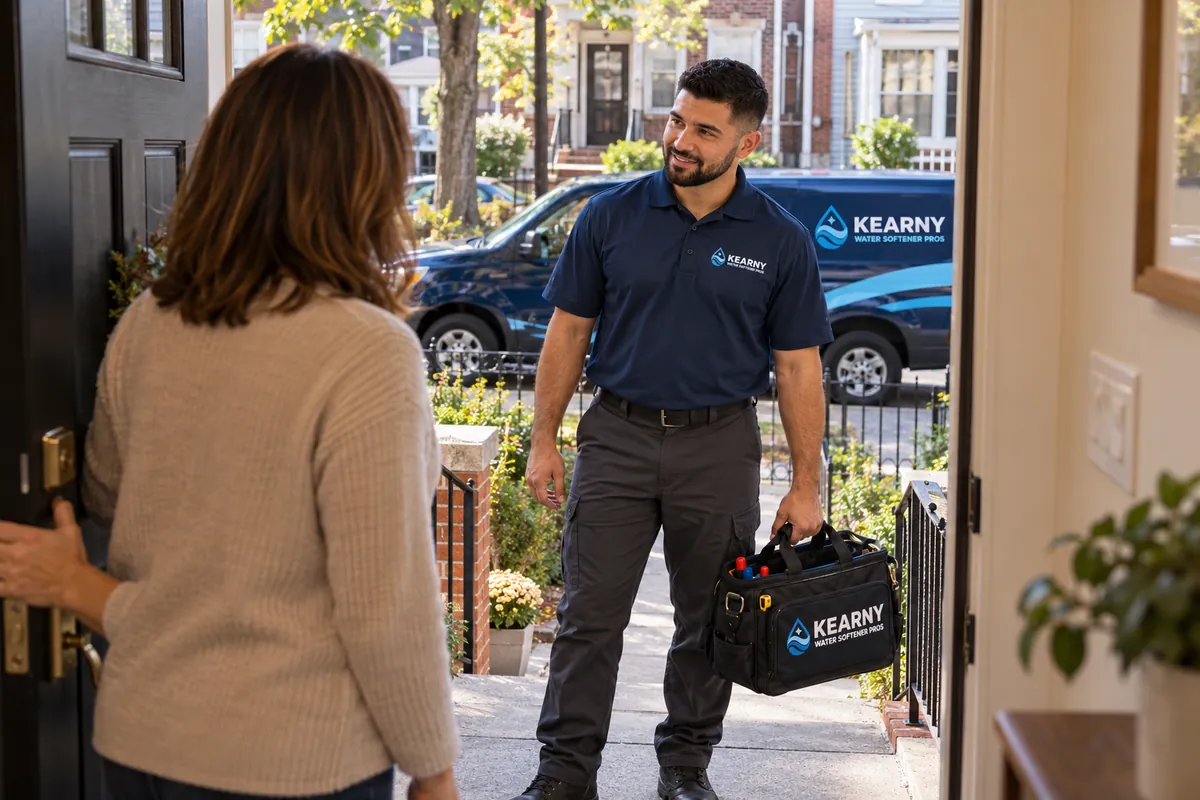
Call anytime for water softener installation or water treatment service. We are open 24 hours a day, 7 days a week, including weekends and holidays. Expect a fast answer and a clear next step.
A quick summary on the call helps us plan the right work for your Kearny home.